
희망기구소식
희망기구소식
미래희망기구의 소식 입니다.
안녕하세요, (사)미래희망기구입니다.
2026년 8월 8일(토), 제26기 유엔 전문가 교육의 마지막 일정인 SDGs 소그룹 발표회 및 수료식이 대원고등학교에서 개최되었습니다. 참가 학생들은 5일간 이어진 교육을 마무리하며, 국제사회가 직면한 주요 과제를 분석하고 청소년의 관점에서 고안한 해결 방안을 발표했습니다.
On August 8, 2026, the SDGs Group Presentation and Certificate Ceremony marked the conclusion of the 26th Training Program on the United Nations and the 2030 Agenda at Daewon High School. The participating students concluded their five-day learning journey by presenting their analyses of pressing global challenges and proposing solutions developed from a youth perspective.
심사위원으로는 이지홍 대표님(ConnectED Lab Founder & Director, 前 유네스코 아시아태평양 국제이해교육원 교육연수실장)과 이수진 선생님(기술투자 전문가, AI 및 신기술 전문가)이 함께해 주셨습니다. 두 심사위원은 각 팀의 문제 분석과 해결 방안, 발표 구성, 전달력과 질의응답 등을 종합적으로 살펴보고 전문적이면서도 실질적인 피드백을 전하며, 짧은 교육 기간에도 복잡한 글로벌 이슈를 깊이 있게 탐구하고 하나의 발표로 완성한 과정을 격려해 주셨습니다.
The judging panel consisted of Ms. Jihong Lee and Mr. Soojin Lee. They evaluated each team’s problem analysis, proposed solutions, presentation structure, delivery, and responses during the Q&A. They also offered practical feedback and words of encouragement, recognizing the students’ efforts to investigate complex global issues and develop their findings into coherent presentations within a limited period.
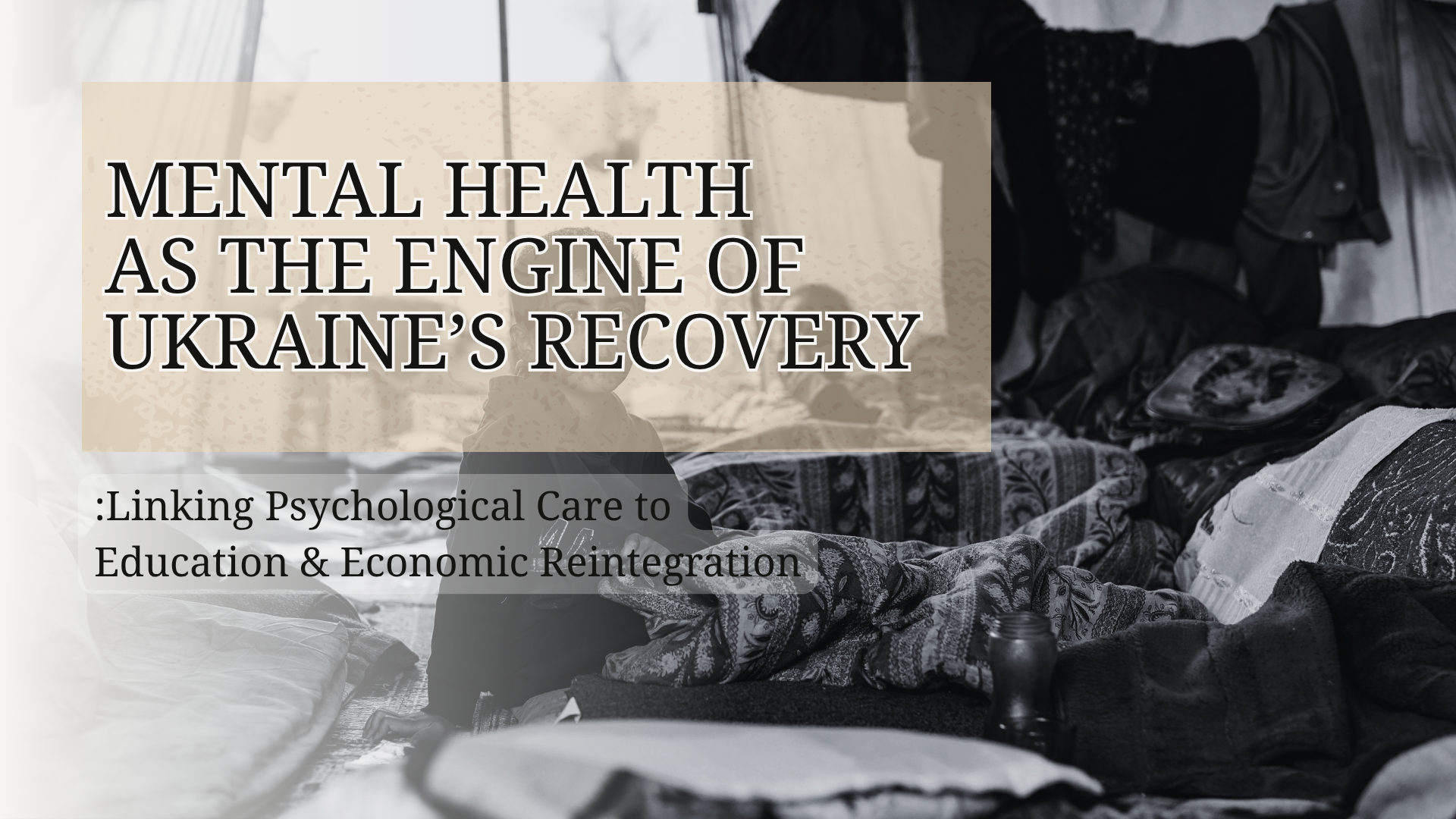
■ Team 1 | Mental Health as the Engine of Ukraine’s Recovery: Linking Psychological Care to Education and Economic Reintegration
발표 주제: 우크라이나 재건 - 심리적 지원과 교육·경제적 재통합의 연계
대표단: 김환이, 서지우, 이서윤, 전민호, 정현정
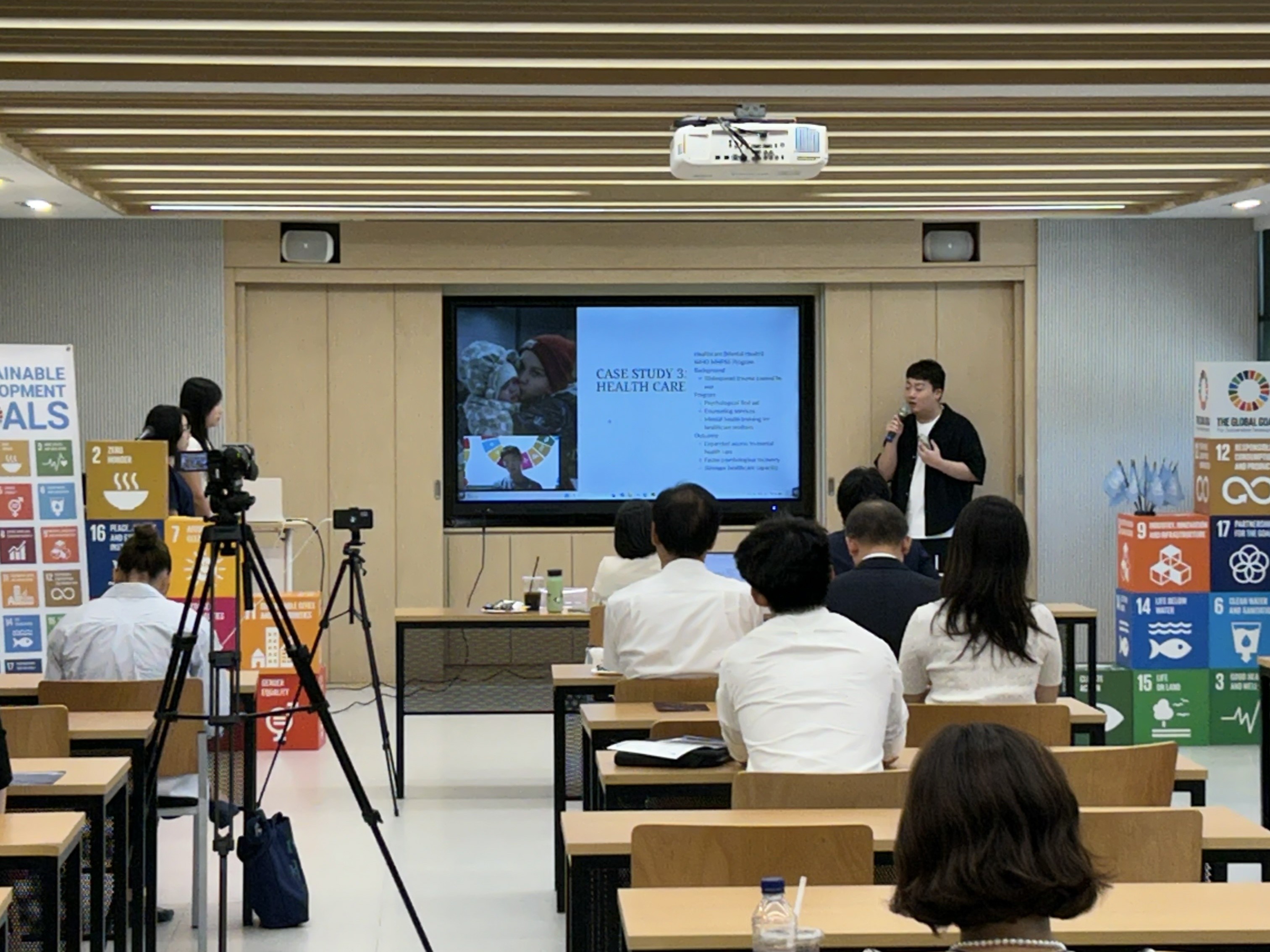
Team 1은 러시아-우크라이나 전쟁이 아동과 청소년, 피란민과 지역 주민의 정신건강에 미친 장기적인 영향을 분석했습니다. 전쟁으로 인한 교육 중단과 가족·공동체의 분리, 강제이주, 지속적인 폭력과 불확실성이 개인의 심리적 회복뿐 아니라 교육과 고용, 의료체계와 사회 전반의 재건에도 영향을 미친다는 점에 주목했습니다.
해결 방안으로는 아동·청소년과 성인을 구분한 통합 정신건강 교육 및 재통합 프로그램을 제안했습니다. 아동·청소년에게는 온라인 정신건강 교육과 학생 멘토링, 또래 지지 프로그램을 제공하고, 성인에게는 전문적인 심리 지원과 회복 준비도 평가, 직업훈련 및 재교육, 취업 연계와 재정 지원을 단계적으로 제공하는 방안입니다. 정신건강과 교육, 고용을 하나의 회복 체계 안에서 연결했다는 점이 돋보였습니다.
Team 1 examined the long-term effects of the Russia-Ukraine war on the mental health of children, adolescents, displaced people, and local communities. The team highlighted how disrupted education, separation from families and communities, displacement, violence, and prolonged uncertainty affect not only individual psychological recovery but also education, employment, healthcare systems, and the broader reconstruction of society. As a solution, they proposed an Integrated Mental Health Education and Reintegration Program tailored to children, adolescents, and adults. The program would provide online mental health education, student mentoring, and peer support for young people, while offering adults professional psychological support, recovery readiness assessments, vocational training, reskilling, employment connections, and financial assistance. The presentation stood out for connecting mental health, education, and employment within an integrated recovery framework.
■ Team 2 | Same Rising Tide, Shared Global Goals
발표 주제: 태평양 도서 지역의 기후적응 재원 접근성 개선
대표단: 김민재, 김태영, 류겸, 류현민, 심이삭
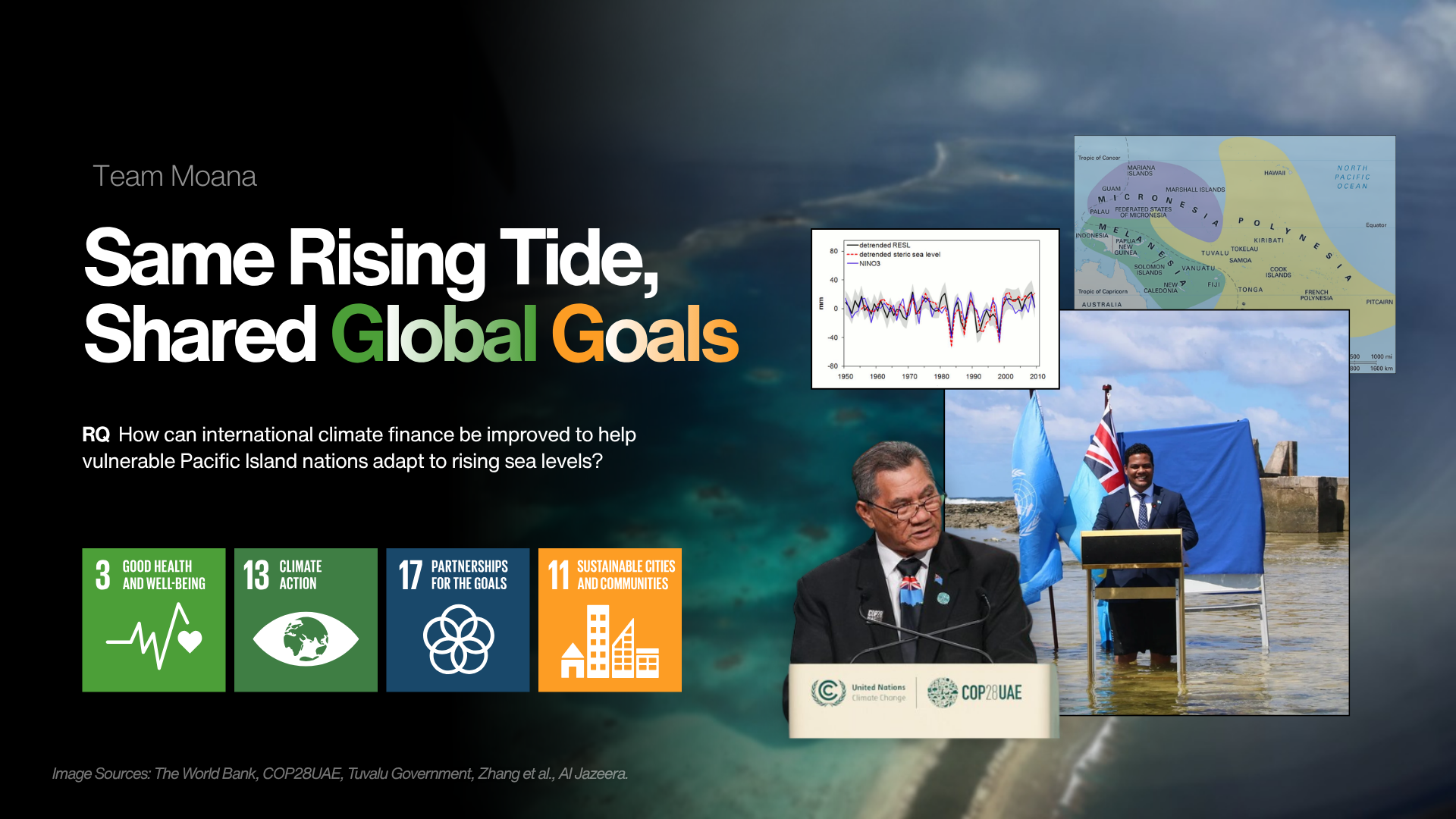
Team 2는 대표적인 저지대 태평양 도서국인 투발루를 중심으로, 해수면 상승에 가장 취약한 국가들이 오히려 국제 기후적응 재원에 충분히 접근하지 못하는 문제를 분석했습니다. 현재의 기후재원이 수원국의 취약성보다 공여국의 정책 우선순위와 예산 주기에 영향을 받고, 개별 사업 단위로 지원되거나 대출 중심으로 운영되는 구조적 한계를 지적하며, 기술의 부재보다 필요한 재원이 적시에 도달하지 않는 것이 더 근본적인 문제라고 분석했습니다.
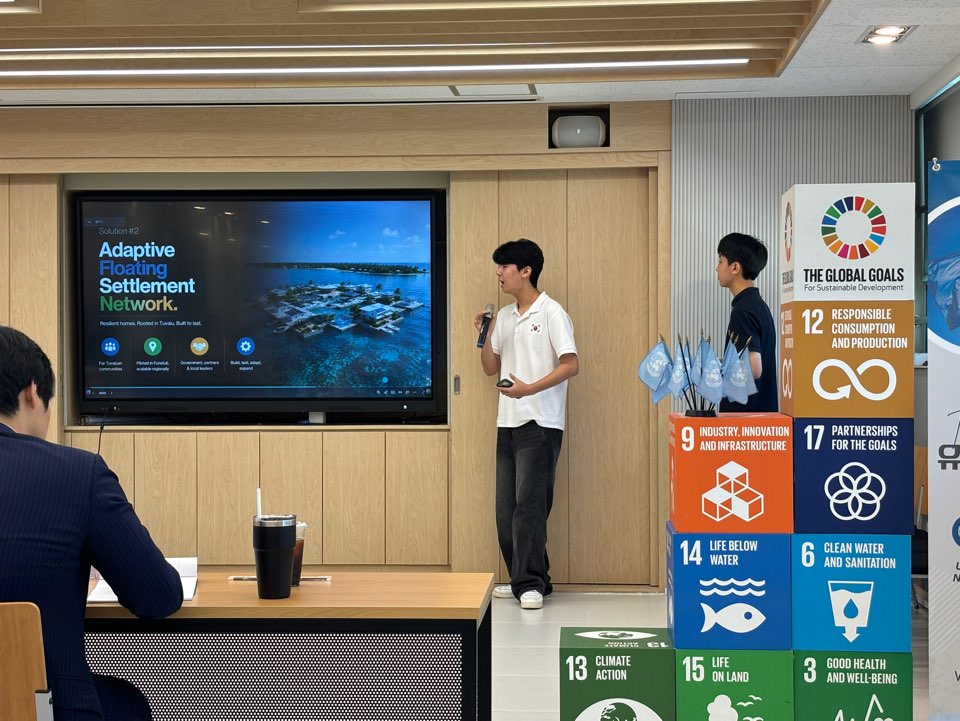
해결 방안으로는 예상 피해가 국내총생산(GDP)에서 차지하는 비율, 저지대 거주 인구, 예상 국토 손실 등의 지표를 활용하는 취약성 우선 재원 배분 기준(Vulnerability-First Allocation Standard)을 제안하였습니다. 새로운 기금을 별도로 조성하기보다 기존 기후재원이 정치적 가시성이 아닌 실질적인 필요와 취약성에 따라 배분되도록 제도를 개선하는 데 초점을 맞추어 설명하였으며, 국제기구와 공여국, 정부, 지역사회가 함께 참여하는 투명한 이행 체계를 제시하였습니다.
Team 2 focused on Tuvalu, one of the world’s most vulnerable low-lying Pacific Island nations, and analyzed why countries most exposed to sea-level rise often struggle to access adequate international climate adaptation finance. The team identified structural limitations in the current system, including its dependence on donor priorities and budget cycles, project-based funding, and loan-centered mechanisms, arguing that the more fundamental challenge is the failure of necessary resources to reach vulnerable countries in a timely manner. As a solution, they proposed a Vulnerability-First Allocation Standard based on indicators such as projected damage as a percentage of GDP, the population living in low-lying areas, and projected land loss. Rather than creating a new fund, the proposal focused on improving the allocation of existing climate finance according to actual need and vulnerability, supported by a transparent implementation framework involving international organizations, donor countries, governments, and local communities.
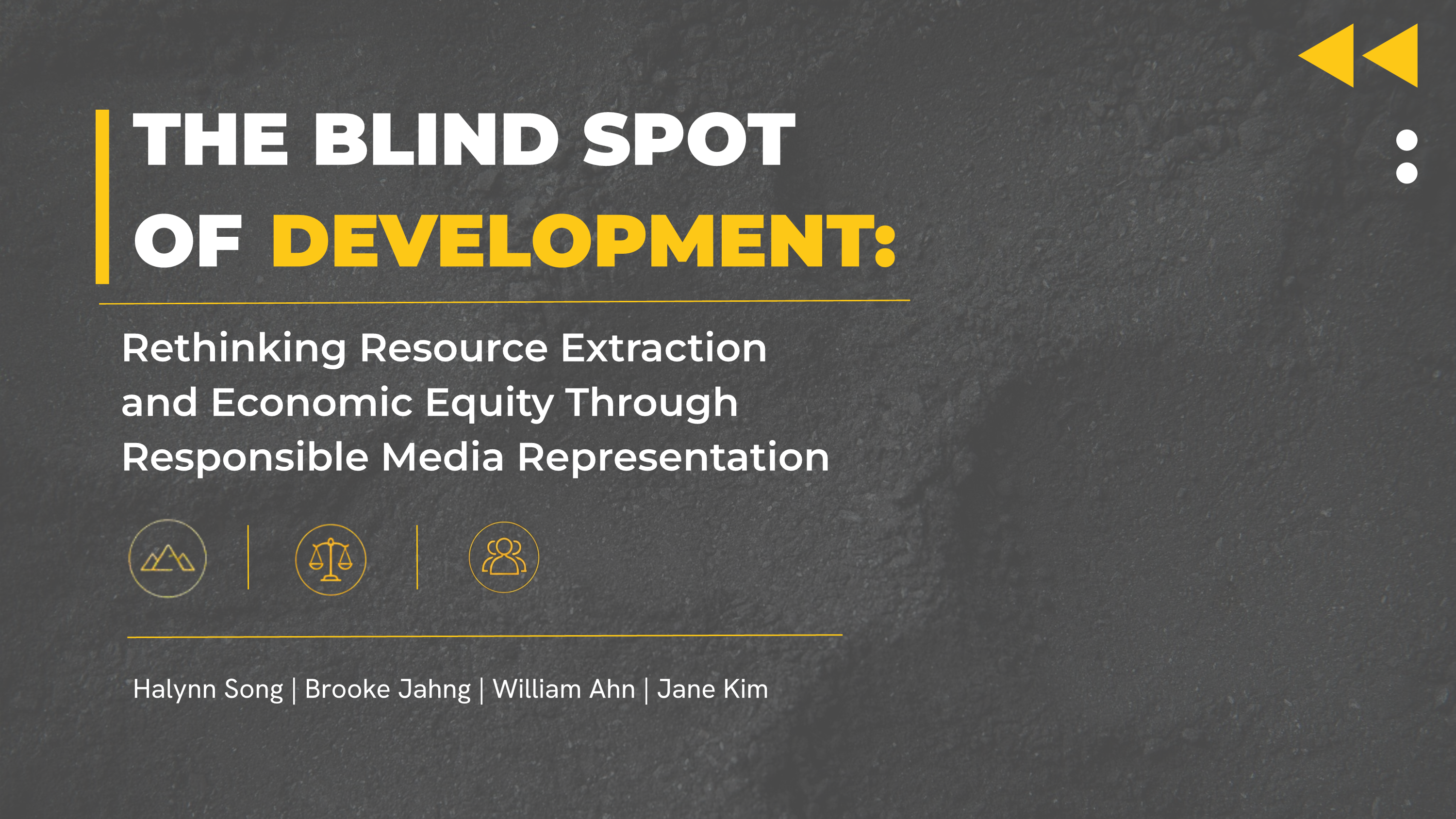
■ Team 3 | The Blind Spot of Development: Rethinking Resource Extraction and Economic Equity Through Responsible Media Representation
발표 주제: 책임 있는 미디어 재현을 통한 자원 채굴과 경제적 형평성의 재고
대표단: 김재인, 송하린, 안영재, 장유현
Team 3는 자원이 풍부한 개발도상국에서 이루어지는 해외투자와 자원 채굴이 언론을 통해 ‘경제성장’이나 ‘개발’로 묘사되는 과정에 주목했습니다. 말리의 금 산업과 동남아시아의 핵심광물 공급망, 한국 기업의 해외 광물자원 확보 사례 등을 통해 외국 자본과 자원 개발이 국가 경제에 기여하는 측면과 함께, 이익의 불평등한 분배와 지역사회의 빈곤, 환경 훼손, 현지 주민의 목소리 부족이라는 문제를 살펴보았습니다. 특히 정부와 기업 중심의 정보에 의존하는 보도가 구조적 불평등을 가릴 수 있음을 지적했습니다.
해결 방안으로는 자원 채굴의 투명성과 경제적 형평성을 높이는 제도적 접근과 함께, 기존 개발 담론의 사각지대를 드러내는 책임 있는 언론의 역할을 강조했습니다. SDG 8 ‘양질의 일자리와 경제성장’, SDG 10 ‘불평등 감소’, SDG 16 ‘평화, 정의 및 제도 구축’을 미디어와 자원 거버넌스의 관점에서 유기적으로 연결한 점이 인상적이었습니다.
Team 3 examined how foreign investment and resource extraction in resource-rich developing countries are often portrayed by the media as signs of economic growth and development. Drawing on cases involving Mali’s gold industry, critical mineral supply chains in Southeast Asia, and Korean companies’ overseas mineral investments, the team explored both the economic contributions of resource development and its challenges, including unequal benefit distribution, local poverty, environmental damage, and the limited representation of community voices. They emphasized that media coverage centered on government and corporate perspectives can obscure structural inequality, and highlighted the importance of responsible journalism and institutional measures to improve transparency and economic equity. The presentation effectively connected SDG 8, Decent Work and Economic Growth; SDG 10, Reduced Inequalities; and SDG 16, Peace, Justice and Strong Institutions through the perspectives of media representation and resource governance.
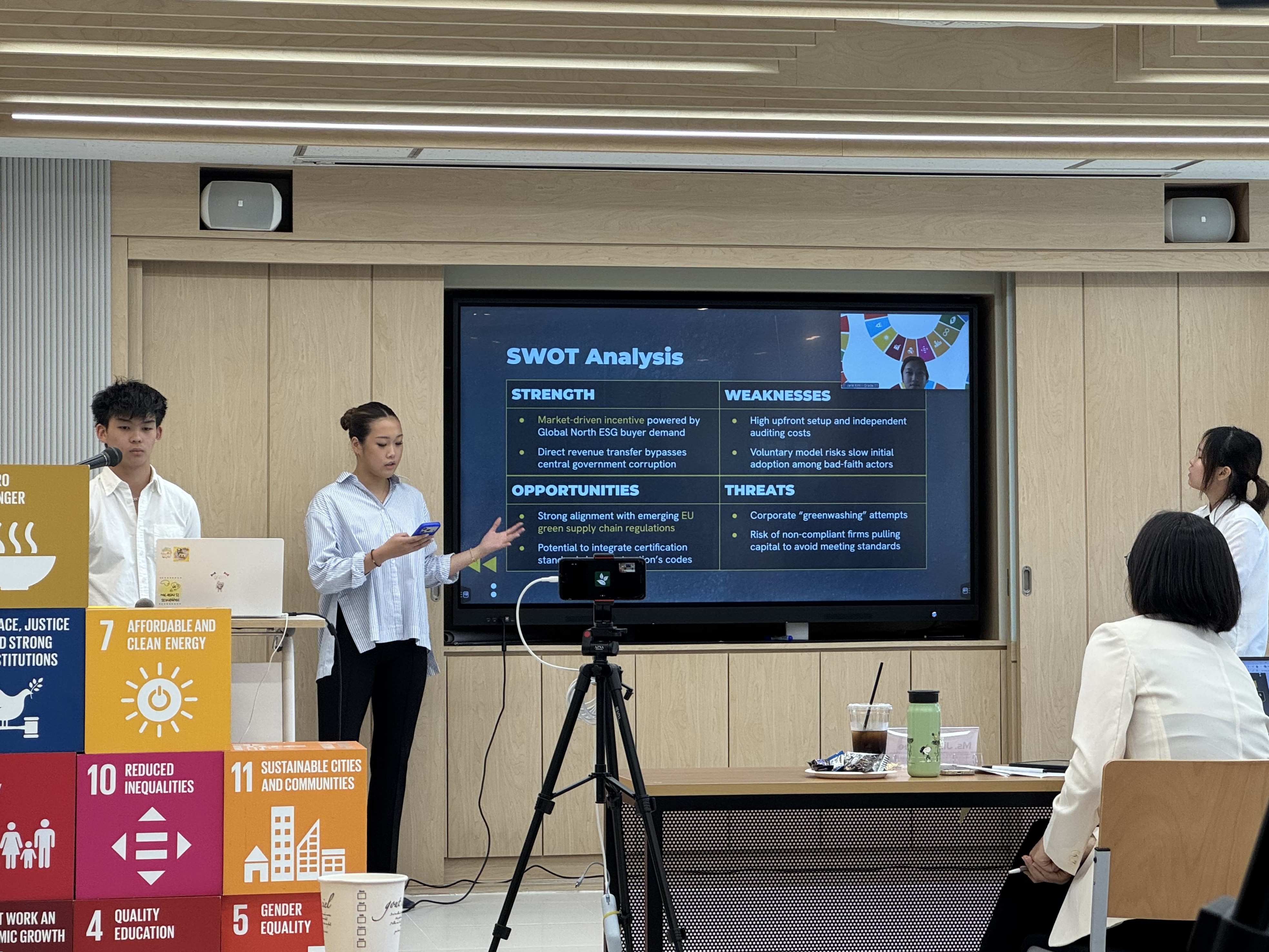
심사 결과, Team 3은 심사위원들의 질의응답에도 준비된 모습으로 답변했으며, 최종 심사에서 가장 높은 종합점수를 기록해 영예의 대상을 수상했습니다. 수상팀 전원에게는 부상으로 2027년 겨울방학 인턴십(2주) 기회가 주어졌습니다.
Following the presentations and Q&A sessions, Team 3 demonstrated strong preparation and responded confidently to the judges’ questions. Based on the final evaluation, Team 3 received the highest overall score and was honored with the Grand Prize. As an additional award, all members of the winning team were given the opportunity to participate in a two-week internship during the 2027 winter vacation.
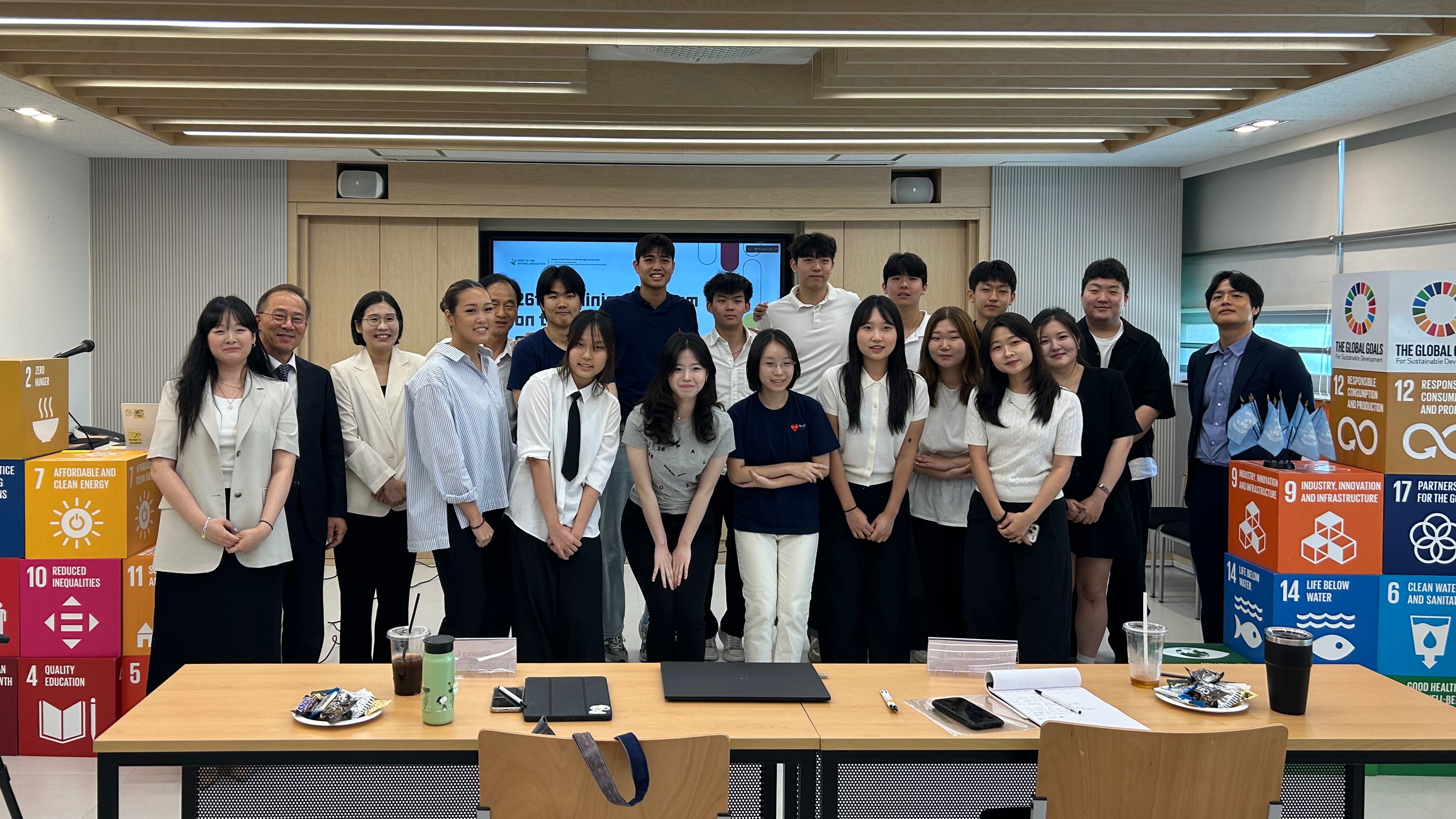
제26기 유엔 전문가 교육에 성실히 참여한 모든 학생에게는 수료증이 수여되었습니다. 학생들은 나흘간의 전문가 강연과 마지막 날의 소그룹 발표를 통해 국제사회의 주요 의제를 학습하는 데 그치지 않고, 하나의 문제를 스스로 정의하고 신뢰할 수 있는 자료를 조사하며 팀원들과 해결 방안을 설계하는 전 과정을 경험했습니다.
미래희망기구는 앞으로도 청소년들이 국제사회의 다양한 목소리에 귀 기울이고, 배움과 협력을 바탕으로 지속가능한 변화를 만들어 갈 수 있도록 함께하겠습니다.


 글수
글수 


