
희망기구소식
희망기구소식
미래희망기구의 소식 입니다.
안녕하세요, (사)미래희망기구입니다.
제26기 UN 전문가 교육 넷째 날에는 젠더평등(SDG 5), 이민과 국제이주, 지속가능한 교통, 해양생태계 보전(SDG 14) 등 다양한 사회·환경적 의제를 탐구했습니다. 학생들은 각 의제가 개인과 지역사회, 국제사회에 미치는 영향을 살펴보고, 글로벌 변화를 이끄는 주체로서 청소년이 수행할 수 있는 역할을 다각도로 논의했습니다.
The fourth day of the program explored a wide range of social and environmental issues, including gender equality (SDG 5), immigration and international migration, sustainable transportation, and marine ecosystem conservation (SDG 14). Students examined how these issues affect individuals, communities, and the international community while reflecting on the role of youth as agents of global change.
01. SDG 5: 국제적 규범에서 지역사회 실천으로 | SDG 5: From International Frameworks to Community Action
연사: Ms. Priscilla Kini (Open Dove Children’s Foundation)
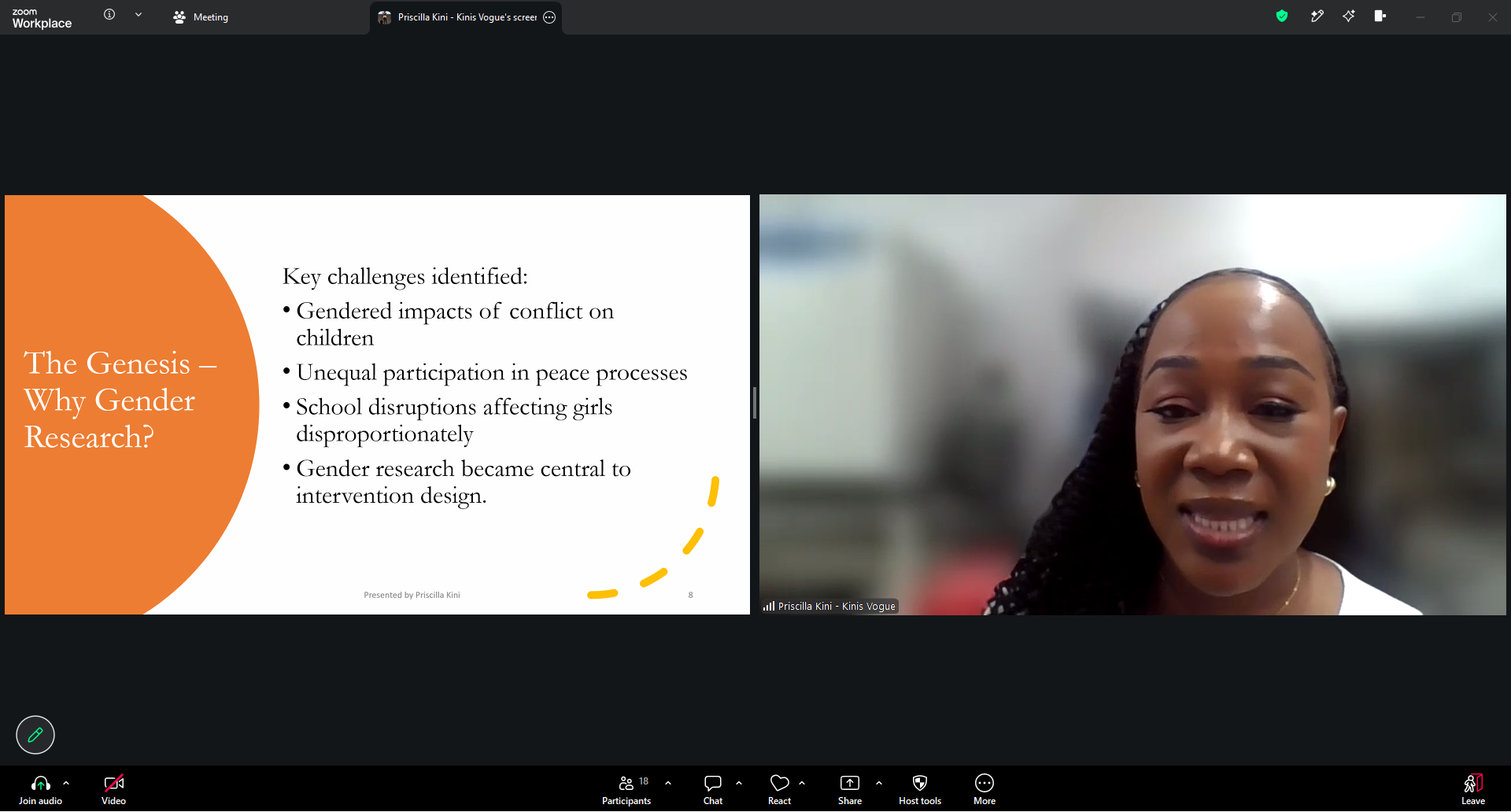
Priscilla Kini 연사님은 “‘젠더(gender)’라는 단어를 들었을 때 가장 먼저 무엇이 떠오르는가?”라는 질문으로 강연을 시작하셨습니다. 이어 가나에서 나타나는 주요 젠더 이슈와 해결 과제를 살펴보고, Open Dove Children’s Foundation이 청소년 중심의 다양한 활동을 통해 지역사회의 변화를 만들어 가는 방식을 소개했습니다. 특히 평화 중재(Peace Intervention)와 대인관계 역량 교육 프로그램(Interpersonal Fluency Skills, IPF) 등의 사례를 통해 국제적 규범과 목표가 지역사회 차원의 실천으로 이어지는 과정을 설명했습니다. 마지막 그룹 활동에서는 여아 교육을 주제로 한 사례를 함께 분석했습니다. 학생들은 젠더 이슈의 배경과 원인, 이해관계자, 가능한 해결 방안을 단계적으로 검토하며 젠더 문제를 분석하는 과정에 대한 이해를 넓혔습니다.
Ms. Priscilla Kini opened the session by asking students what first came to mind when they heard the word “gender.” By sharing their interpretations and associations, students were able to recognize the range of perspectives surrounding the topic. She then examined key gender-related issues and challenges in Ghana and introduced how the Open Dove Children’s Foundation works to create change at the community level through youth-centered initiatives. Examples including Peace Intervention and the Interpersonal Fluency Skills (IPF) training program illustrated how international frameworks and goals can be translated into community action.
02. 이민과 국제이주 | Immigration and International Migration
연사: 박정문 연구원 / 박사과정 (University of Illinois Urbana-Champaign)
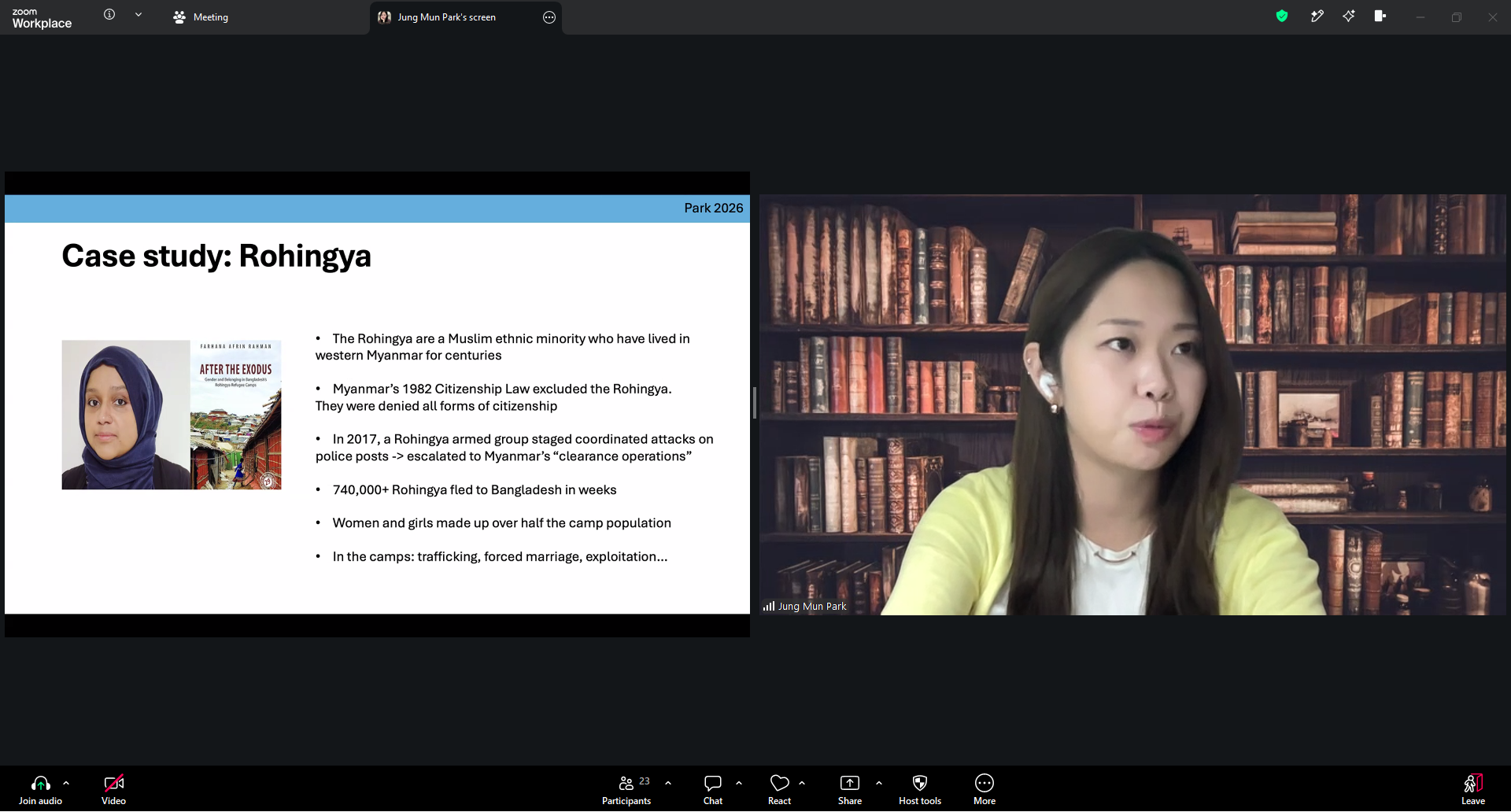
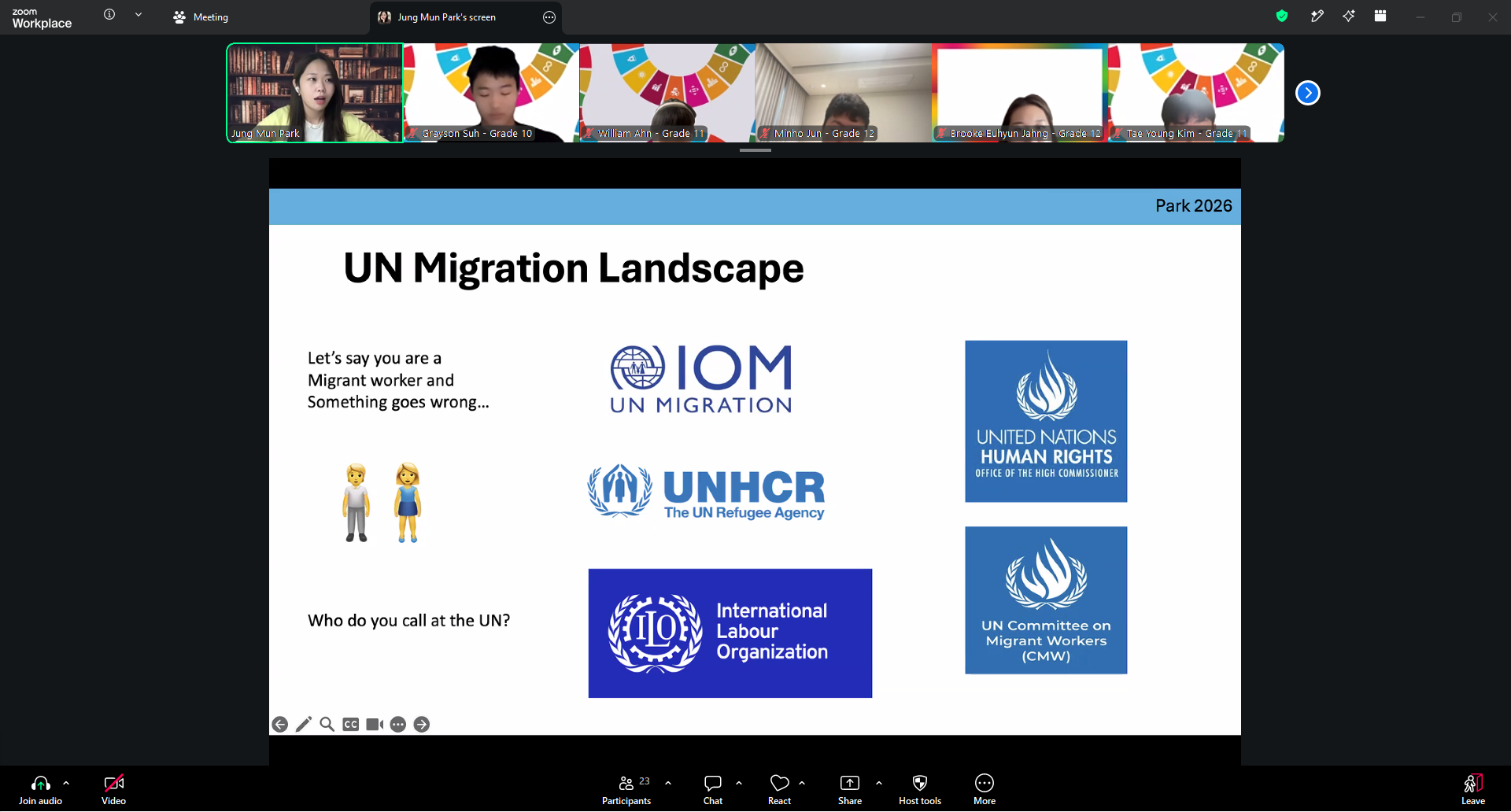
다음으로는 이민과 국제이주를 주제로 오늘날 국제사회에서 나타나는 다양한 이주 양상과 그 배경을 설명해 주신 박정문 연구원님을 만났습니다. 학생들은 국가 간 이주를 단순한 인구 이동이 아니라 정치·경제·사회·환경적 요인이 복합적으로 작용하는 글로벌 현상으로 바라보는 것이 중요하다는 점을 배웠습니다. 또한 여러 연구 사례를 바탕으로 국경을 넘는 이동이 개인과 공동체, 출신국과 목적국에 가져오는 사회적 변화와 그 의미를 살펴보았습니다.
Ms. Jung Mun Park introduced immigration and international migration by explaining the diverse patterns of human mobility observed in today’s international community and the factors underlying them. Students learned the importance of viewing cross-border migration not simply as population movement, but as a global phenomenon shaped by interconnected political, economic, social, and environmental factors. Drawing on research cases, the session also examined the social changes that migration can bring to individuals, communities, countries of origin, and destination countries.
03. 지속가능한 교통과 회복력 | Sustainable Transportation and Resilience
연사: 유선빈 교수 (성균관대학교)
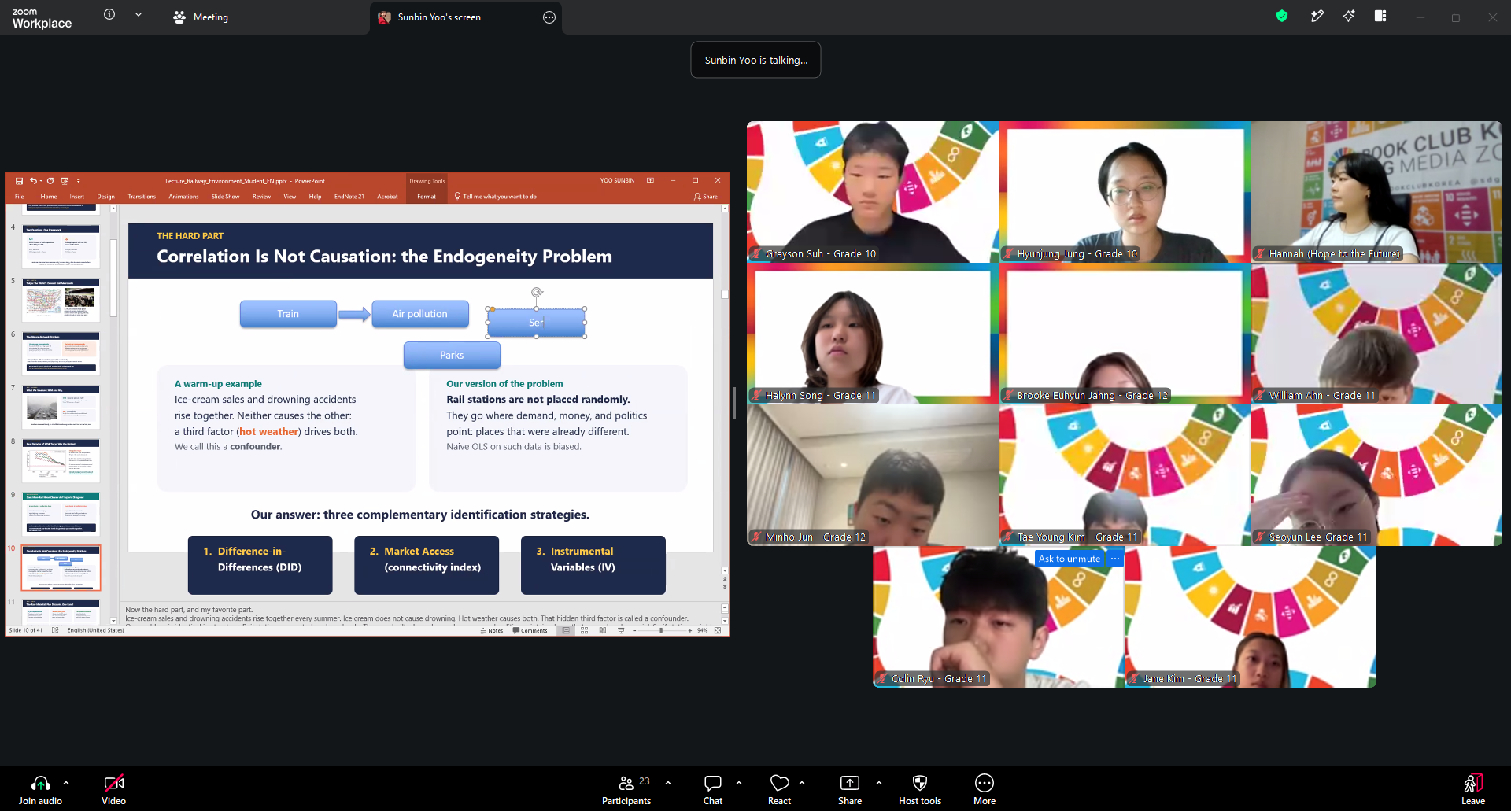
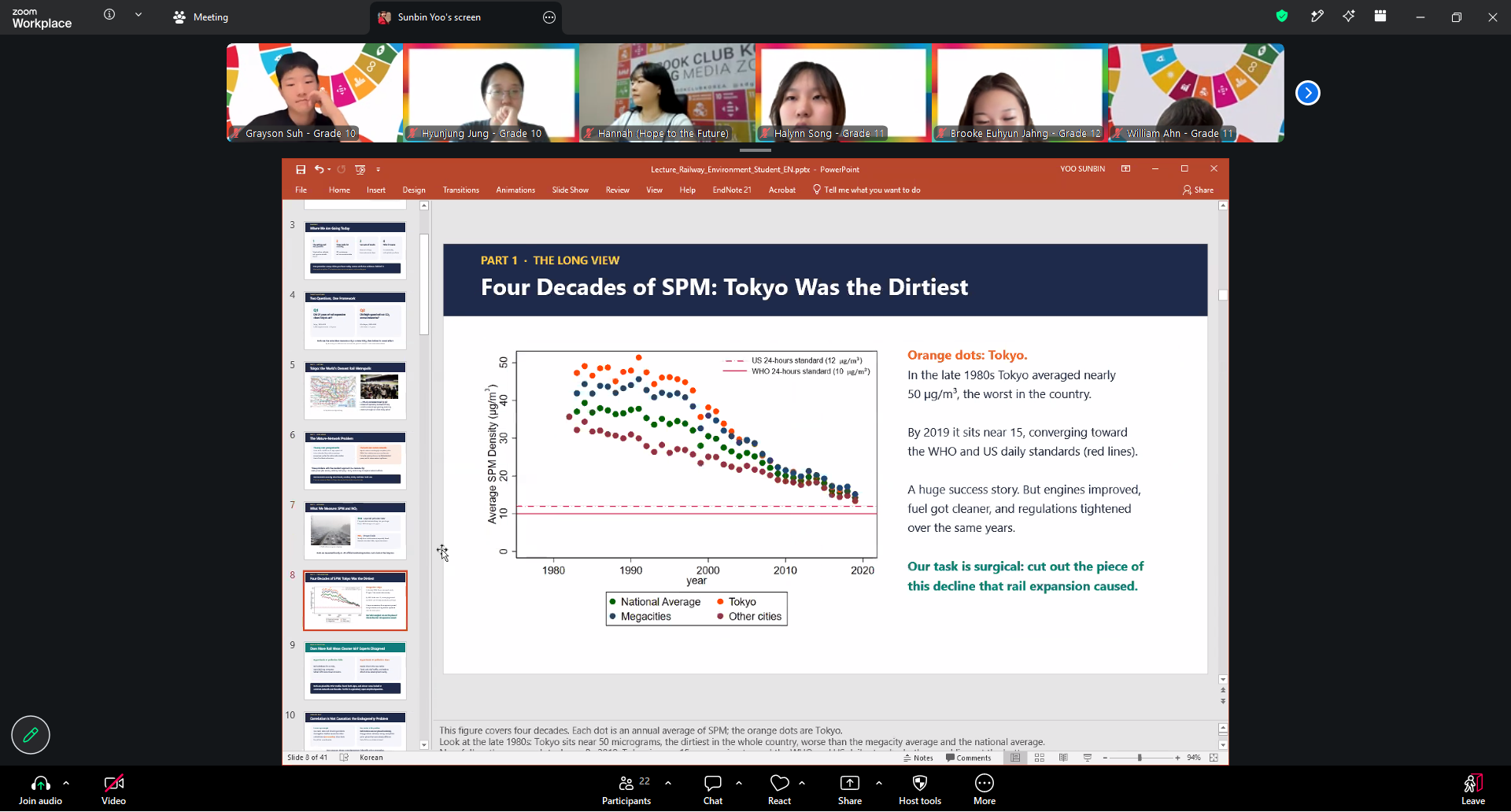
유선빈 교수님은 “철도가 대기오염을 줄일 수 있을까?(Can Railways Clean the Air?)”라는 흥미로운 질문으로 강연을 시작하셨습니다. 일본에서 연구하신 경험을 바탕으로 교통체계와 환경의 관계를 설명하고, 철도와 같은 대중교통 기반시설이 도시 환경과 대기질에 미칠 수 있는 영향을 살펴보았습니다. 이 과정에서 두 현상 사이에 상관관계가 나타난다고 해서 한 현상이 다른 현상의 직접적인 원인이라고 단정할 수는 없다는 ‘상관관계는 인과관계를 의미하지 않는다(Correlation does not imply causation)’는 연구의 기본 원칙을 강조해 주셨습니다. 학생들은 자유롭게 의견을 나누고 질의응답에 참여하며 지속가능한 교통과 환경 문제를 근거에 기반해 분석하는 방법을 익힐 수 있었습니다.
Dr. Sunbin Yoo opened the session with the engaging question, “Can Railways Clean the Air?” Drawing on her research experience in Japan, she explained the relationship between transportation systems and the environment and explored how public transportation infrastructure, including railways, may affect urban environments and air quality. During the session, she emphasized a fundamental principle of research: “Correlation does not imply causation.” In other words, an observed relationship between two variables does not necessarily mean that one directly causes the other.
04. SDG 14를 위한 회복력 구축: 해양생태계 보전 | Building Resilience for SDG 14: Life Below Water
연사: 손유미 전문관 (세계자연보전연맹(IUCN))
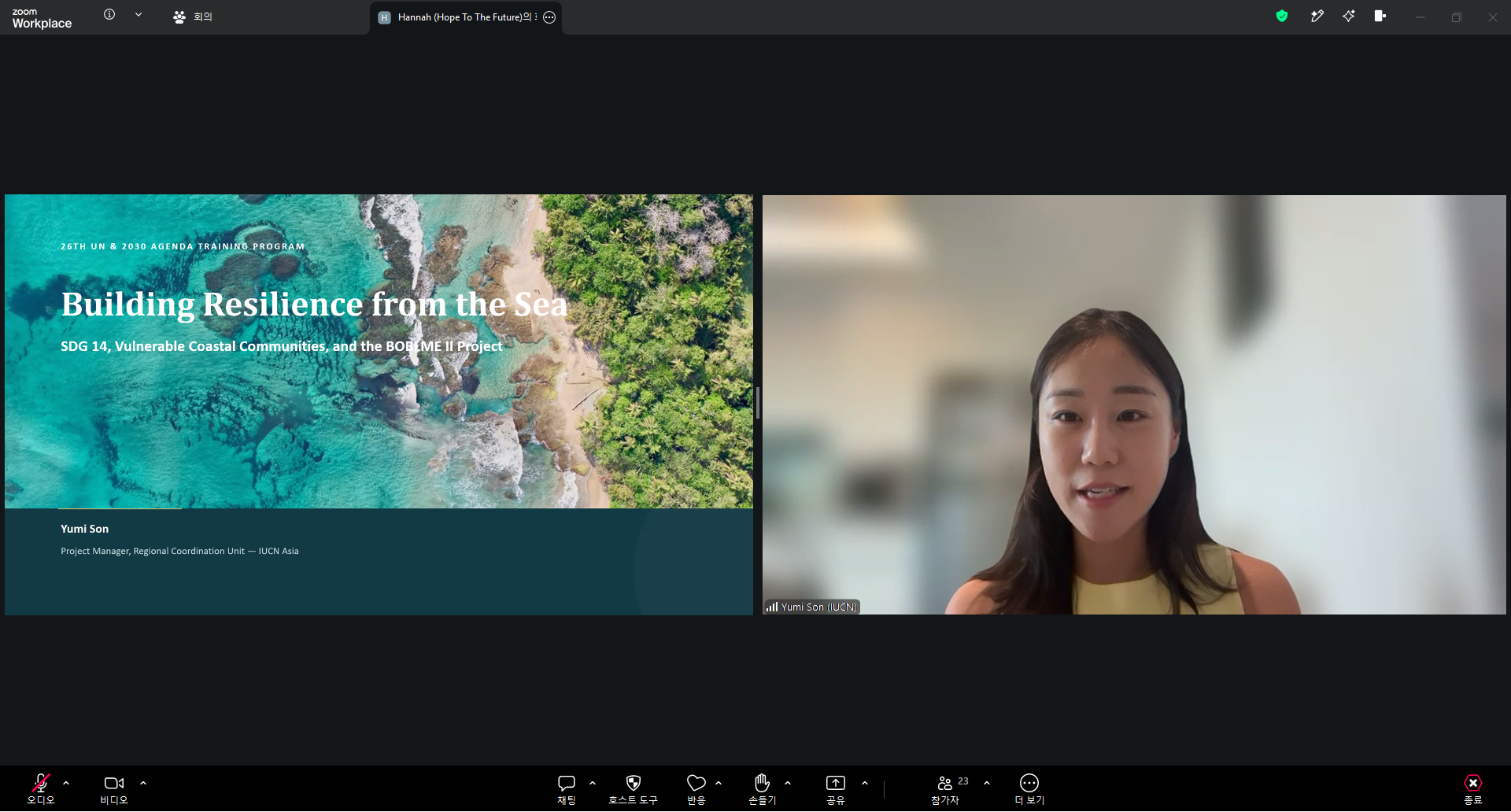
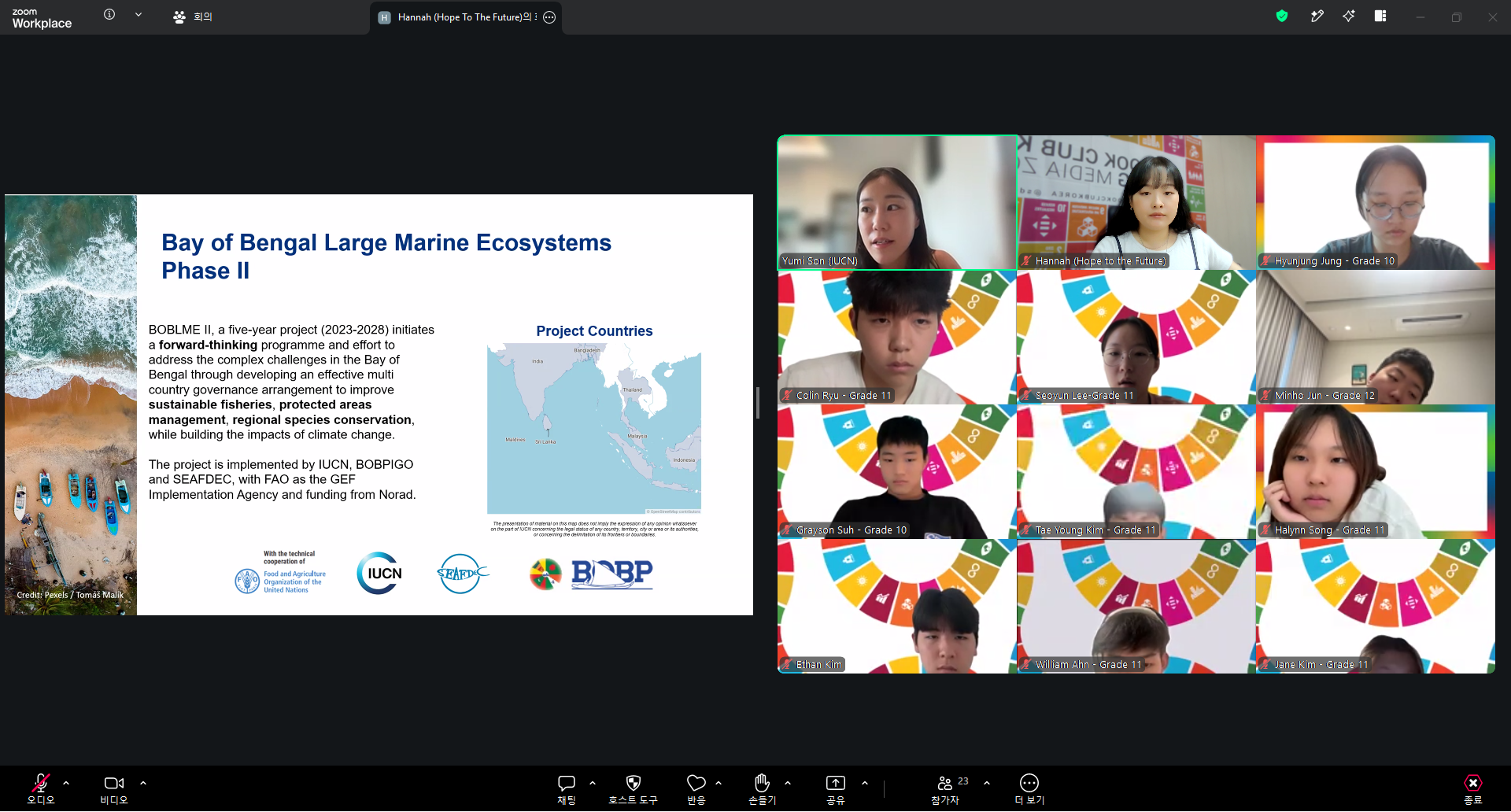
손유미 전문관님은 해양생태계가 직면한 주요 위협과 이에 대응하기 위한 국제사회의 노력, 그리고 SDG 14 ‘해양생태계 보전’을 이행하기 위한 접근 방안을 소개해 주셨습니다. 특히 기후변화와 해양오염 등 환경적 위협에 효과적으로 대응하려면 생태계와 지역사회의 회복력을 높이고 취약성을 줄이는 노력이 필요하다고 강조하시며, 실제 IUCN에서 진행하는 BOBLME 프로젝트를 사례로 소개해 주셨습니다.
Ms. Yumi Son discussed the major threats facing marine ecosystems, international efforts to address these challenges, and approaches to advancing SDG 14, Life Below Water. She emphasized that effectively responding to environmental threats, including climate change and marine pollution, requires efforts to strengthen the resilience of ecosystems and communities while reducing their vulnerability. Drawing on the BOBLME 2 Project, in which she has been involved in recent years, the session also highlighted the close connections among marine ecosystems, biodiversity, food security, local economies, and human well-being.
05. 젠더와 발전 | Gender and Development
연사: 김소희 연구원 (한국개발연구원(KDI))
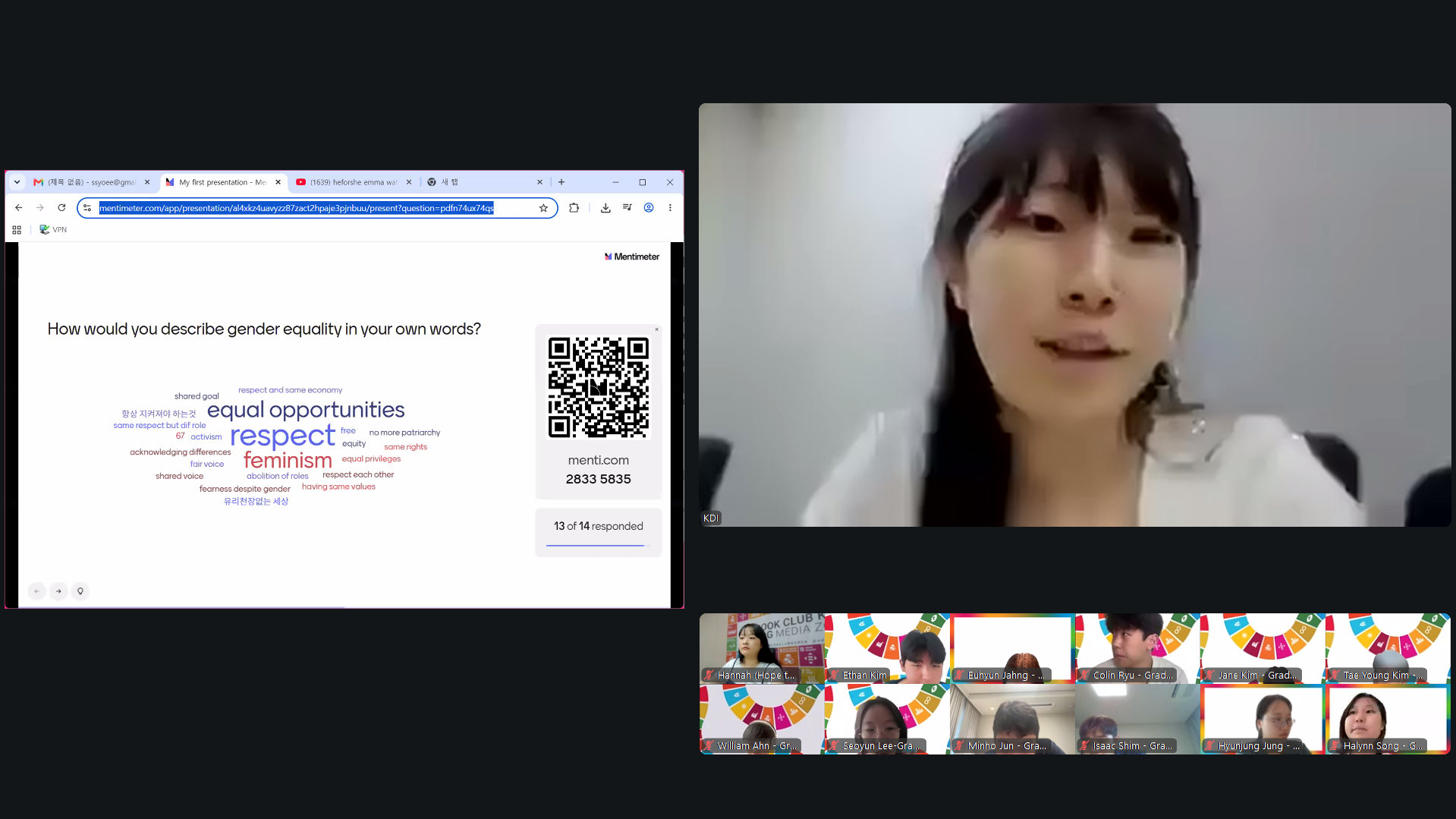
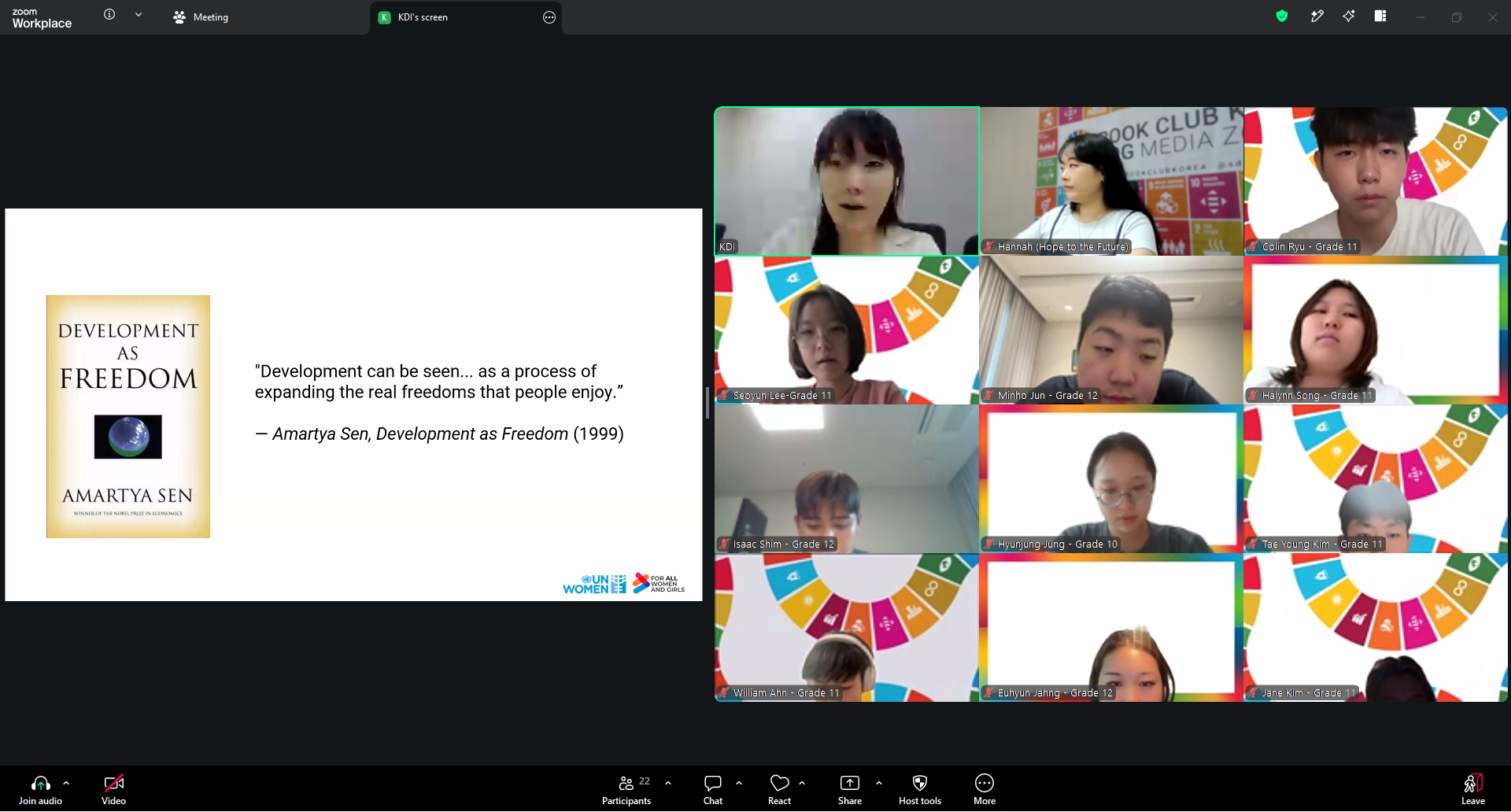
한국개발연구원에 근무하고 계시는 김소희 연구원님은 젠더감수성과 성평등이 지속가능발전에 미치는 영향을 중심으로 강연을 진행해 주셨습니다. 학생들은 자신이 이해하고 있는 성평등의 의미를 되돌아보는 활동을 통해 개인의 생각과 경험을 SDG 5 ‘성평등’의 목표와 연결 지어 생각해 볼 수 있었고, 젠더불평등이 교육과 고용, 건강, 사회참여 등 개인과 사회의 여러 영역에 미칠 수 있는 영향을 살펴보며 성평등이 지속가능발전의 핵심 요소인 이유를 이해할 수 있었습니다.
Ms. Sohee Kim explored how gender awareness and gender equality contribute to sustainable development. Through an activity reflecting on their own understanding of gender equality, students connected their ideas and experiences to SDG 5, Gender Equality. They also examined how gender inequality can affect different areas of individual and social life?including education, employment, health, and social participation?and considered why gender equality is essential to sustainable development.
06. 청년 주도의 성평등 실천 | Youth-Led Action for Gender Equality
연사: Ms. Indrani Goswami (The GEG Global Foundation)
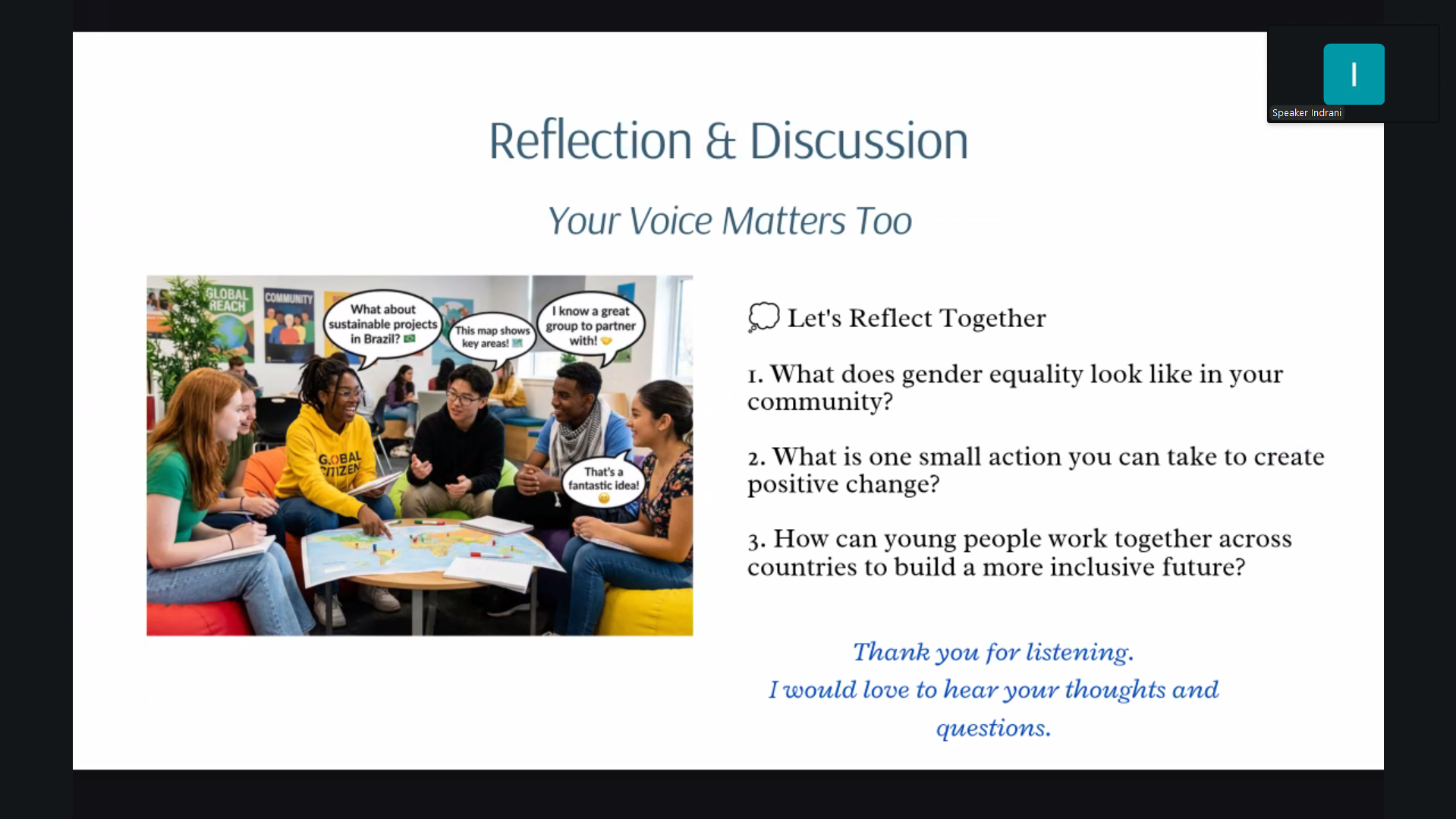
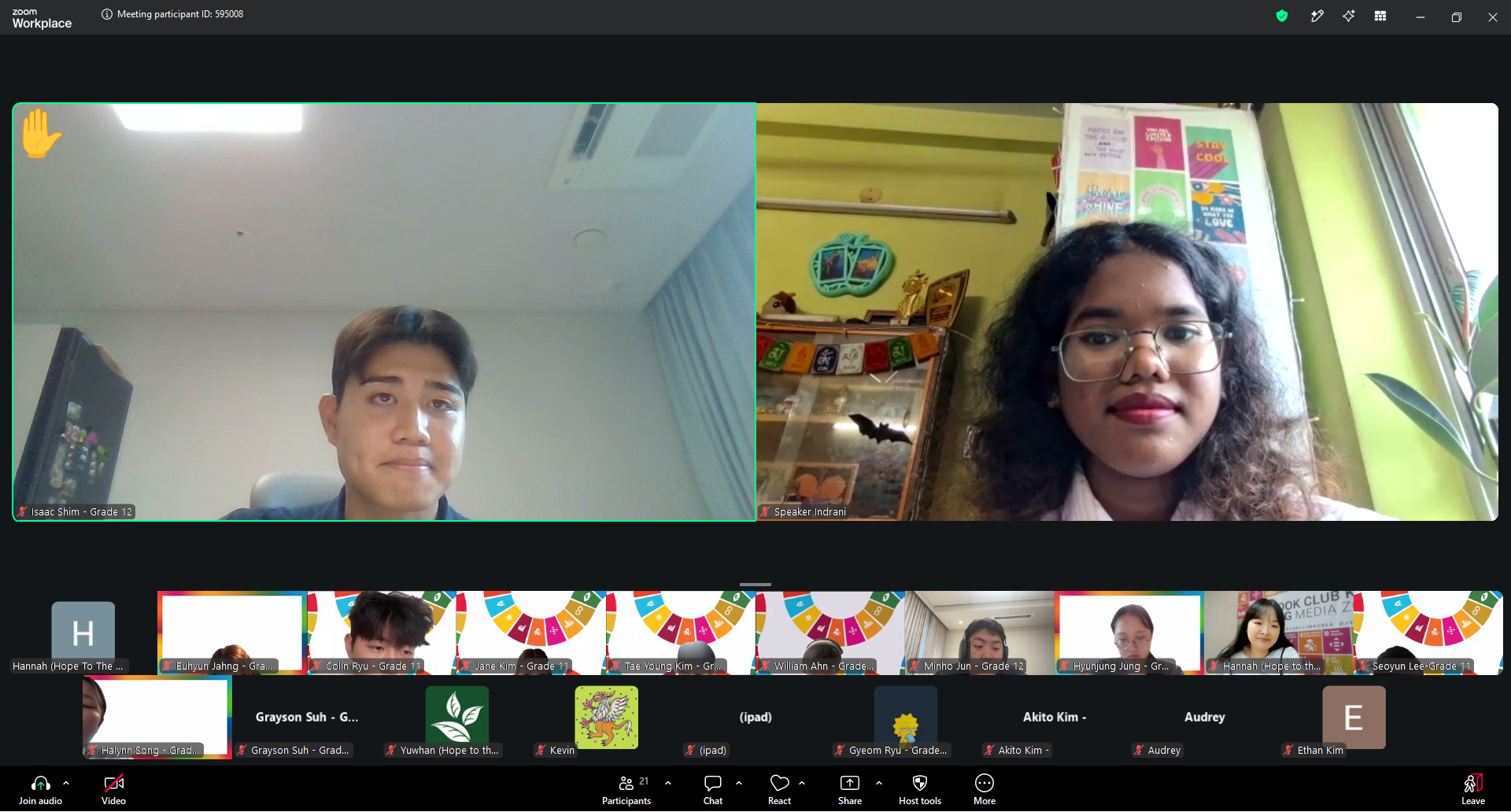
이어 청년이 성평등을 실현하는 변화의 주체가 될 수 있다는 메시지를 남겨 주신 Indrani Goswami 연사님을 초청했습니다. 특히 자신의 경험을 바탕으로 관심 있는 글로벌 의제를 실제 활동과 진로로 연결해 나가는 과정에 관해 이야기해 주셨습니다.
Centered on the message that young people can be powerful agents of change for gender equality, Ms. Indrani Goswami shared experiences from her career journey in international cooperation. She discussed how an interest in global issues can be developed into meaningful action and a professional path.
교육 넷째 날은 젠더평등과 국제이주, 지속가능한 교통, 해양생태계 보전 등 국제사회가 직면한 다양한 현안을 폭넓게 탐구하는 시간이었습니다.
학생들은 글로벌 이슈가 서로 다른 사회·문화·경제·환경적 맥락 속에서 복합적으로 나타난다는 점을 이해했습니다. 또한 국제적 목표가 실질적인 변화로 이어지기 위해서는 제도와 정책뿐만 아니라 지역사회와 개인, 특히 청년의 적극적인 참여와 실천이 필요하다는 점을 배웠습니다.
귀중한 경험과 통찰을 나누어 주신 모든 연사분께 진심으로 감사드립니다.
The fourth day provided students with an opportunity to explore a broad range of global issues, including gender equality, international migration, sustainable transportation, and marine ecosystem conservation.
Students learned that global challenges emerge within complex social, cultural, economic, and environmental contexts. They also recognized that translating international goals into meaningful change requires not only institutions and policies, but also the active participation and action of local communities, individuals, and young people in particular.
We extend our sincere gratitude to each of our distinguished speakers for sharing their valuable experience and insights.


 글수
글수 


