
희망기구소식
희망기구소식
미래희망기구의 소식 입니다.
제26기 UN 전문가 교육 셋째 날에는 기후변화와 도시 환경, 공적개발원조(ODA), 자원 희소성 등 국제사회가 직면한 시급한 과제를 집중적으로 살펴보았습니다. 학생들은 각 문제가 서로 어떻게 연결되어 있는지 이해하고, 국제사회와 지역사회 차원에서 마련할 수 있는 실질적인 대응 방안을 모색했습니다.
The third day of the program focused on urgent global challenges facing the international community, including climate change, urban environments, Official Development Assistance (ODA), and resource scarcity. Students examined how these issues are interconnected and explored practical responses at both the international and local levels.
01. SDG 13과 글로벌 기후위기 | SDG 13 and the Global Climate Crisis
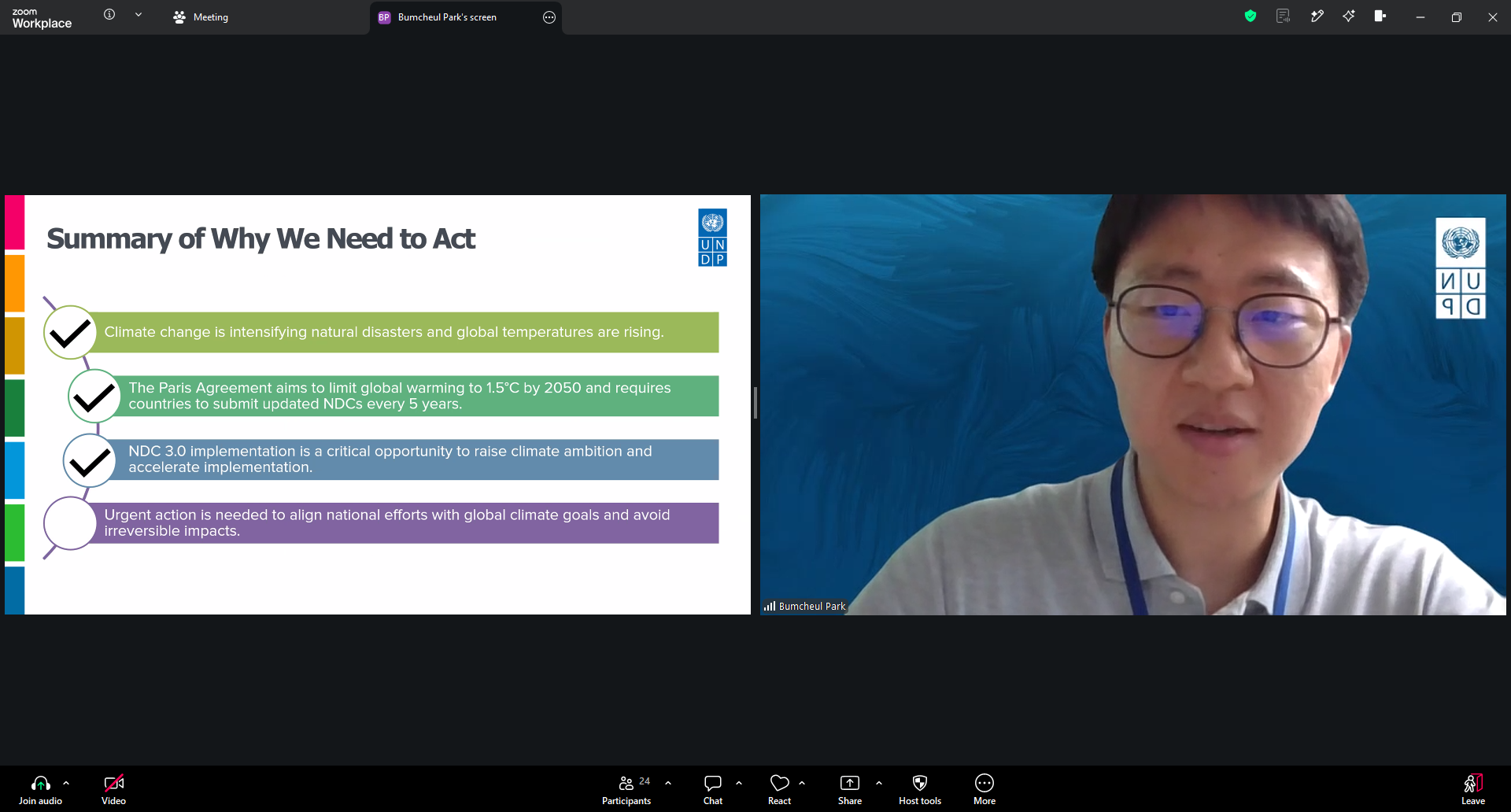
연사: 박범철 담당관 (유엔개발계획(UNDP) 서울정책센터)
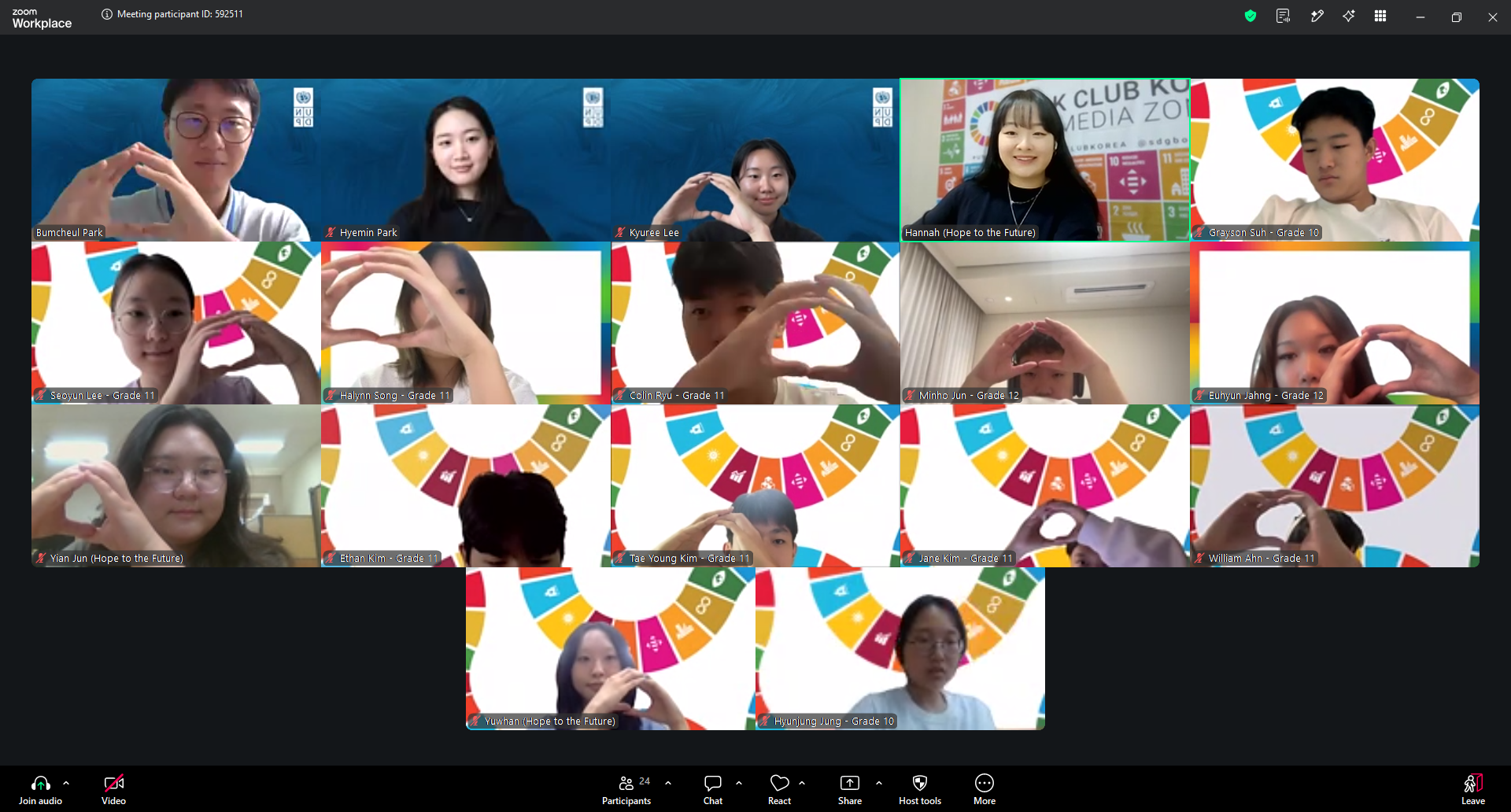
박범철 담당관님은 SDG 13 ‘기후변화와 대응’을 중심으로 기후변화가 국제사회에 미치는 영향과 이에 대응하기 위한 유엔의 역할을 전반적으로 소개해 주셨습니다. 이어 다양한 사례를 통해 기후변화가 어느 한 국가만의 책임이나 노력으로 해결할 수 있는 문제가 아니라, 국제사회의 공동 대응이 필요한 과제임을 설명했습니다. 또한 기후위기에 대응하는 과정에서 정부와 국제기구, 기업, 시민사회, 개인 등 다양한 주체의 참여와 협력이 중요하다는 점을 강조했습니다. 실제 사무소의 박혜민, 이규리 인턴이 함께해 주셨습니다.
Mr. Bumcheul Park provided an overview of SDG 13, Climate Action, explaining the impacts of climate change on the international community and the role of the United Nations in responding to the global climate crisis. He also presented a range of examples illustrating that climate change cannot be addressed through the efforts of any single country. The speakers emphasized the need for a collective international response and cooperation among diverse actors, including governments, international organizations, businesses, civil society, and individuals. The session was further enriched by the participation of Ms. Hyemin Park and Ms. Kyuree Lee, interns at the Seoul Policy Centre.
02. 새로운 도시의제와 SDG 11 현지화를 통한 기후변화 적응 | Climate Change Adaptation through the New Urban Agenda and SDG 11 Localization
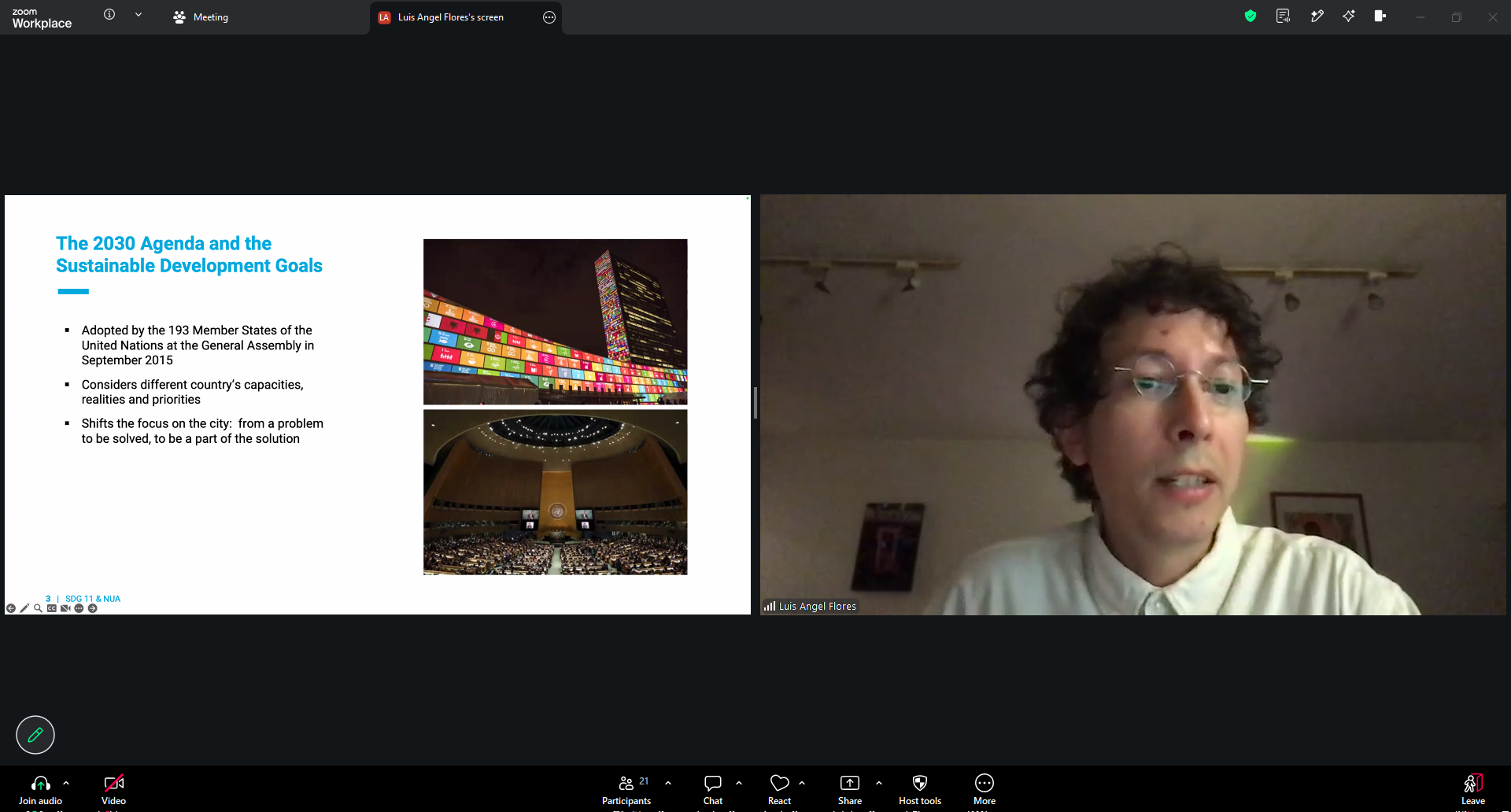
연사: Dr. Luis Angel (유엔해비타트)
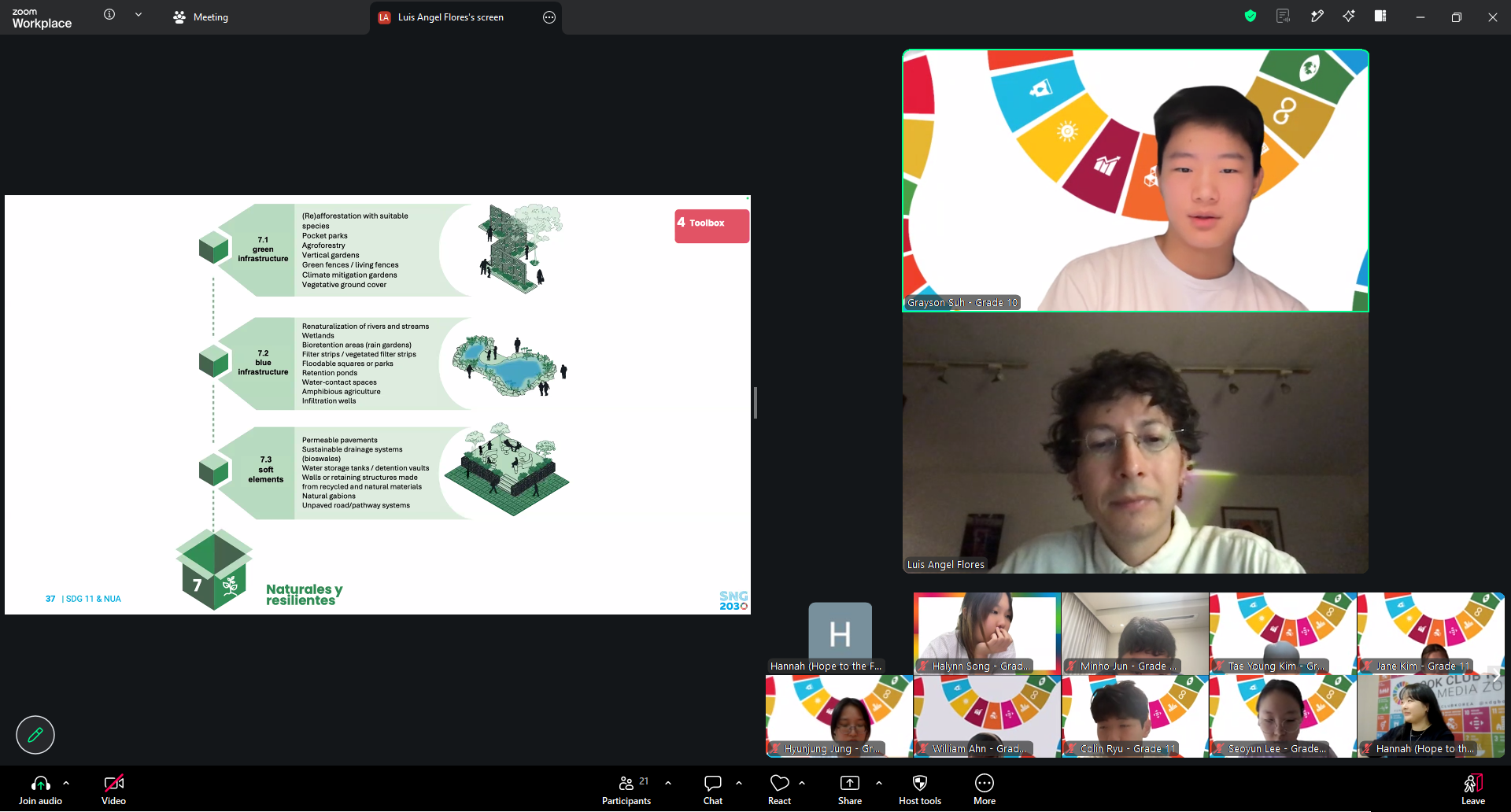
Luis Angel 전문관님은 새로운 도시의제(New Urban Agenda)와 SDG 11 ‘지속가능한 도시와 공동체’의 연계를 바탕으로, 도시가 기후변화에 적응하기 위해 필요한 정책과 실천 방안을 소개했습니다. 특히 세계적 차원의 지속가능발전목표를 각 도시와 지역사회의 여건에 맞게 구체적인 정책과 사업으로 전환하는 ‘SDG 현지화(SDG localization)’의 중요성을 강조했습니다. 또한 SDG 11의 세부목표를 중심으로 포용적이고 안전하며 회복력 있고 지속가능한 도시를 조성하기 위해 고려해야 할 다양한 요소를 설명해 주셨습니다.
학생들은 인구와 기반시설, 경제활동이 집중된 도시가 기후변화의 영향을 크게 받는 동시에 기후위기 대응에서 중요한 역할을 수행할 수 있다는 점을 이해했습니다. 이를 통해 도시와 기후변화의 관계를 새로운 관점에서 바라보고, 지역의 특성을 반영한 해결책의 중요성을 생각해 볼 수 있었습니다.
Dr. Luis Angel introduced the New Urban Agenda and its connection to SDG 11, Sustainable Cities and Communities, explaining the policies and actions needed to help cities adapt to climate change. He emphasized the importance of SDG localization?the process of translating global sustainable development goals into concrete policies and initiatives that reflect the specific circumstances of cities and local communities. Drawing on the targets of SDG 11, he also discussed the different factors involved in making cities inclusive, safe, resilient, and sustainable.
Students learned that cities, where populations, infrastructure, and economic activities are concentrated, are highly vulnerable to the effects of climate change but can also play a critical role in addressing the climate crisis. The session provided a new perspective on the relationship between cities and climate change and highlighted the value of locally tailored solutions.
03. 공적개발원조의 최근 동향과 시사점 | Recent Trends and Implications of Official Development Assistance
연사: 김중현 협력관 (유엔식량농업기구(FAO))
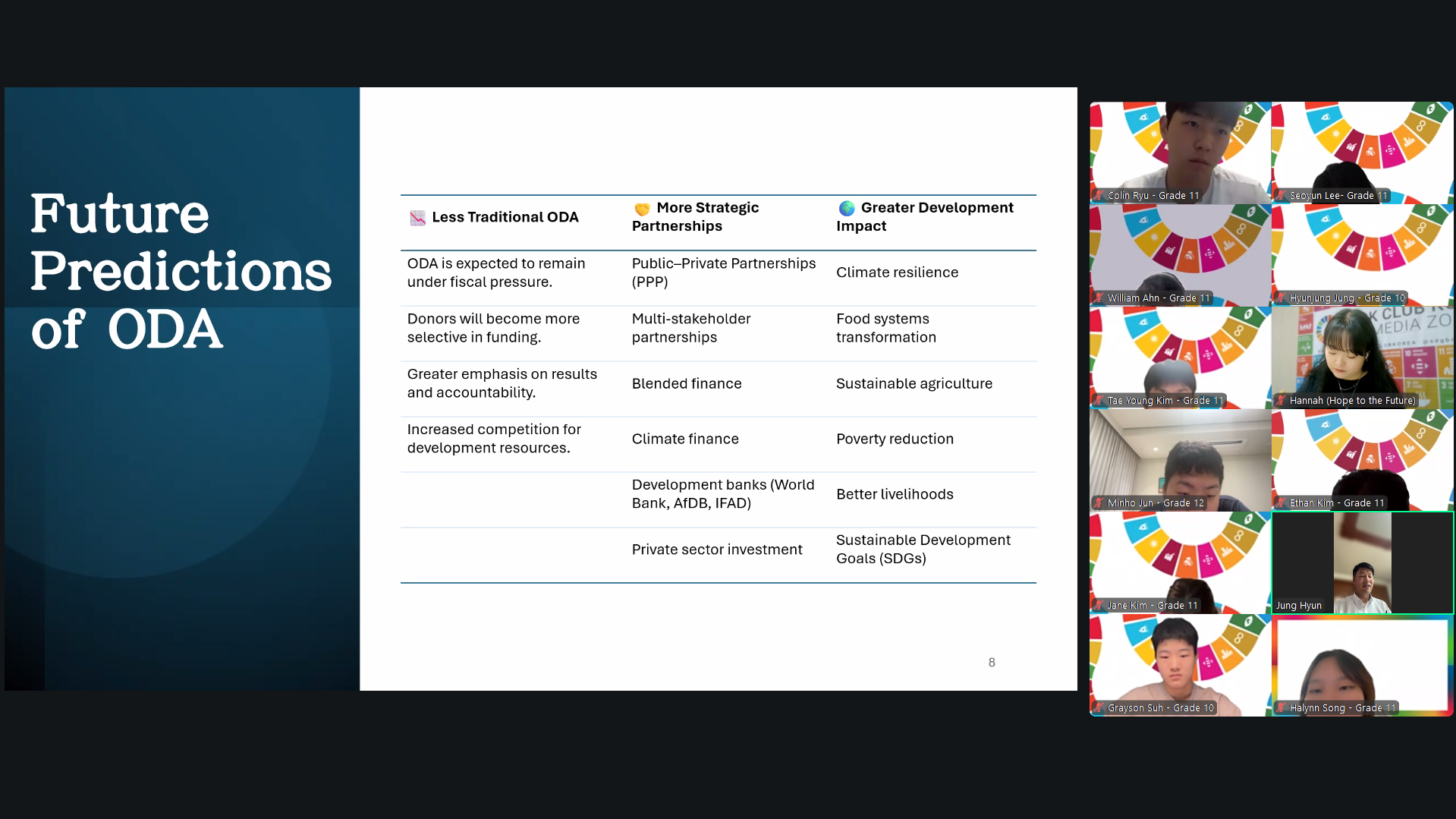
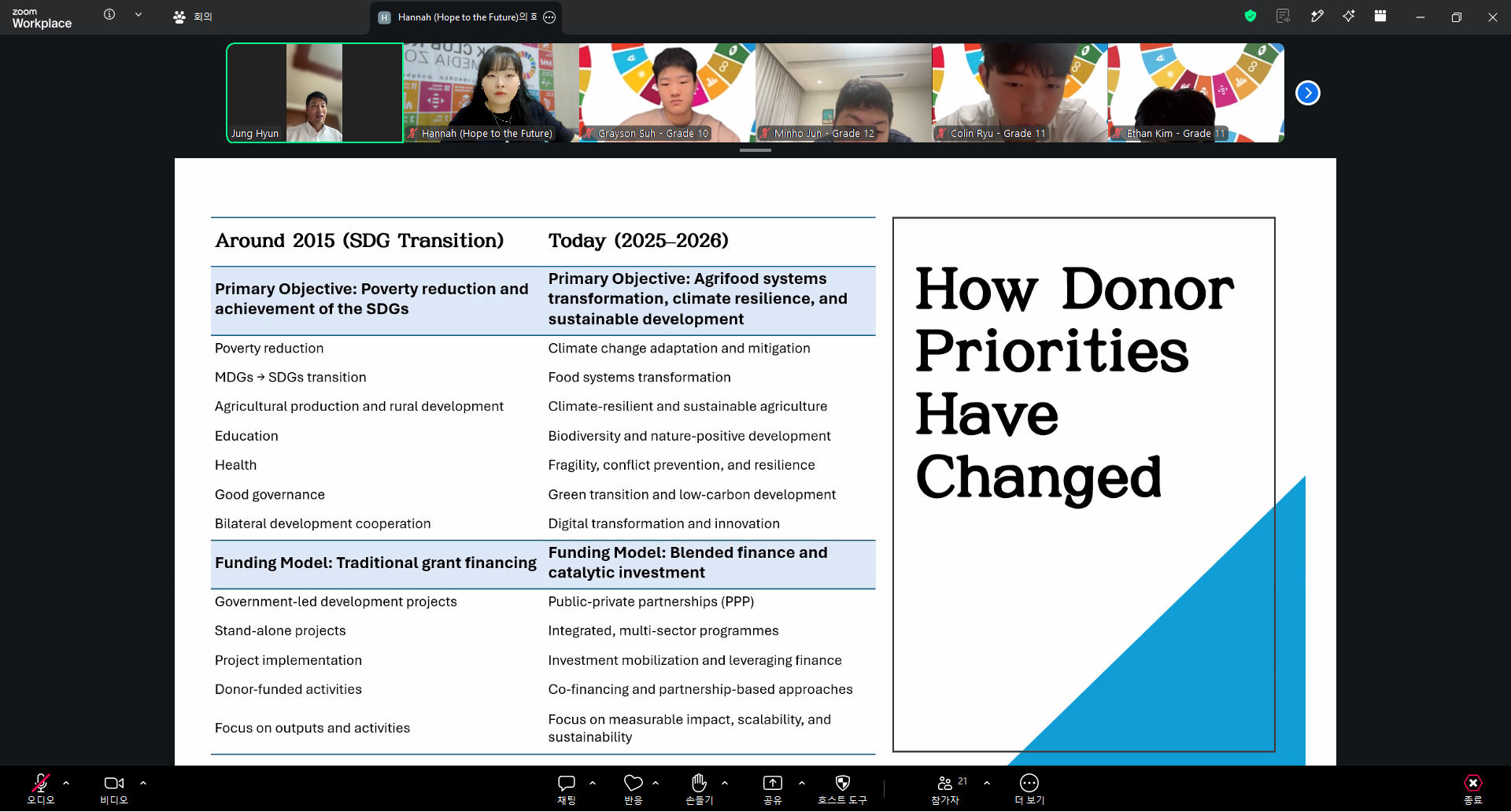
김중현 협력관님은 공적개발원조(ODA)의 개념과 최근 동향을 소개하고, 지속가능발전목표 달성을 위한 ODA의 의미와 역할을 설명해 주셨습니다. 실제 사례를 바탕으로 빈곤과 식량안보, 기후변화 등 복합적인 글로벌 과제에 효과적으로 대응하기 위해서는 국가와 국제기구, 개발협력기관 등 다양한 주체 간의 파트너십과 안정적인 재원 마련이 중요하다는 점을 강조해 주셨습니다.
Mr. Junghyun Kim introduced the concept of Official Development Assistance (ODA) and its recent trends, explaining its significance and role in advancing the Sustainable Development Goals. Drawing on real-world examples, he emphasized that addressing complex global challenges?including poverty, food security, and climate change?requires strong partnerships among governments, international organizations, development cooperation agencies, and other stakeholders, together with the mobilization of adequate and sustainable financial resources.
04. 기온 상승 시대의 희소성 거버넌스: 21세기의 물, 식량 그리고 에너지 | Governing Scarcity in a Hotter World: Water, Food, and Power in the 21st Century
연사: Ms. Carine Valarche (DEFRA, UK Government)
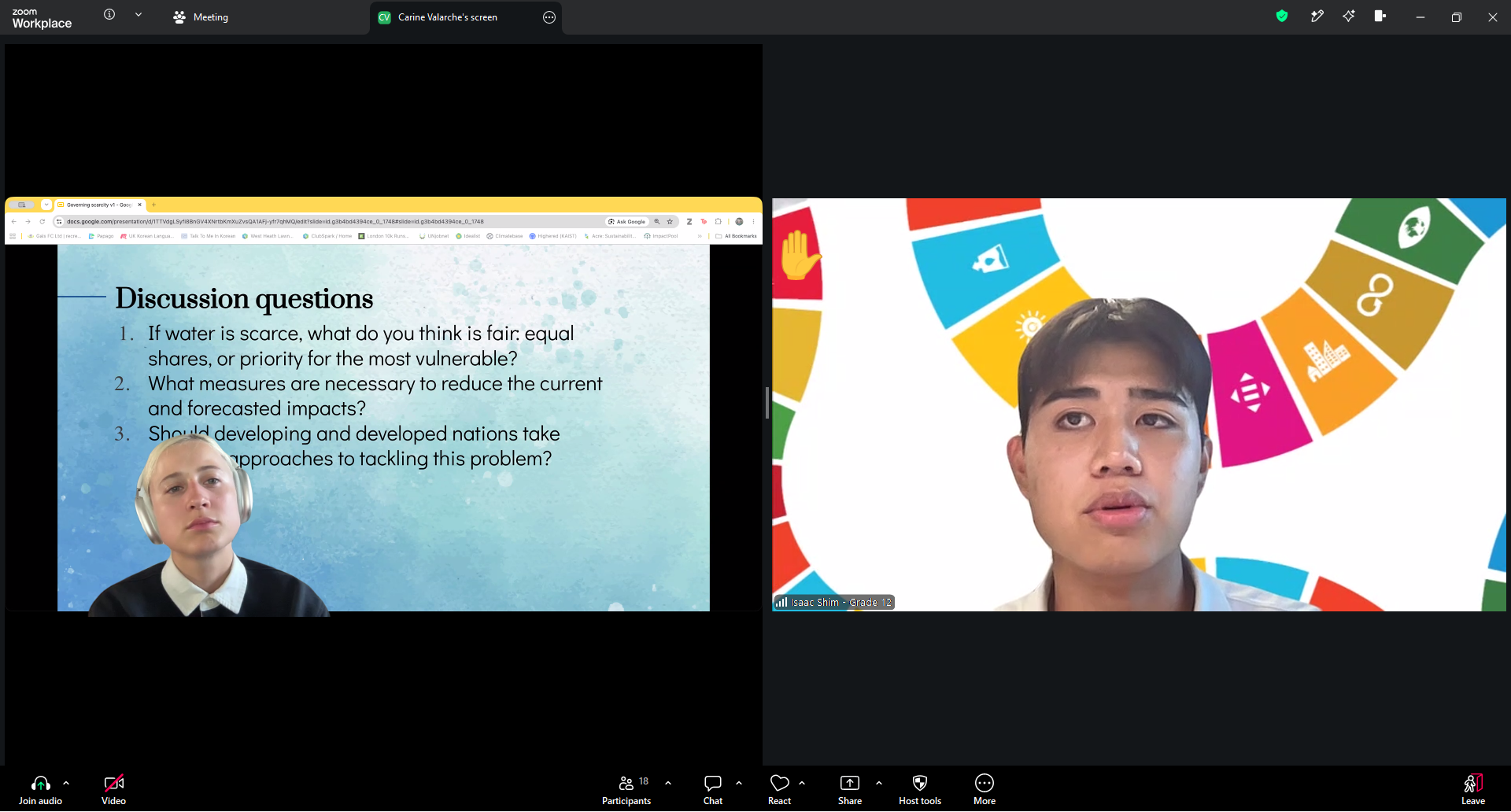
Carine Valarche 연사님은 기후변화가 심화되는 상황에서 물과 식량 같은 필수 자원을 어떻게 관리하고 공정하게 배분할 것인지, 그리고 이 과정에서 권력과 의사결정 구조가 어떠한 영향을 미치는지 설명했습니다. 특히 주제와 관련된 다양한 질문을 제시하고 학생들이 자유롭게 의견을 나누며 함께 답을 찾아갈 수 있도록 적극적인 참여를 이끌어 주셨습니다. 학생들은 자원의 희소성이 단순히 자원의 절대적인 부족만을 의미하는 것이 아니라, 자원에 접근하고 이를 배분하는 사회적·정치적 구조와도 연결되어 있음을 생각해 보았습니다.
Ms. Carine Valarche discussed how essential resources such as water and food should be managed and distributed as climate change intensifies, as well as how power and decision-making structures influence these processes. Through a series of thought-provoking questions, she encouraged students to share their views freely and work together to develop possible responses. Students considered how scarcity is shaped not only by the absolute availability of resources but also by the social and political structures that determine access and distribution.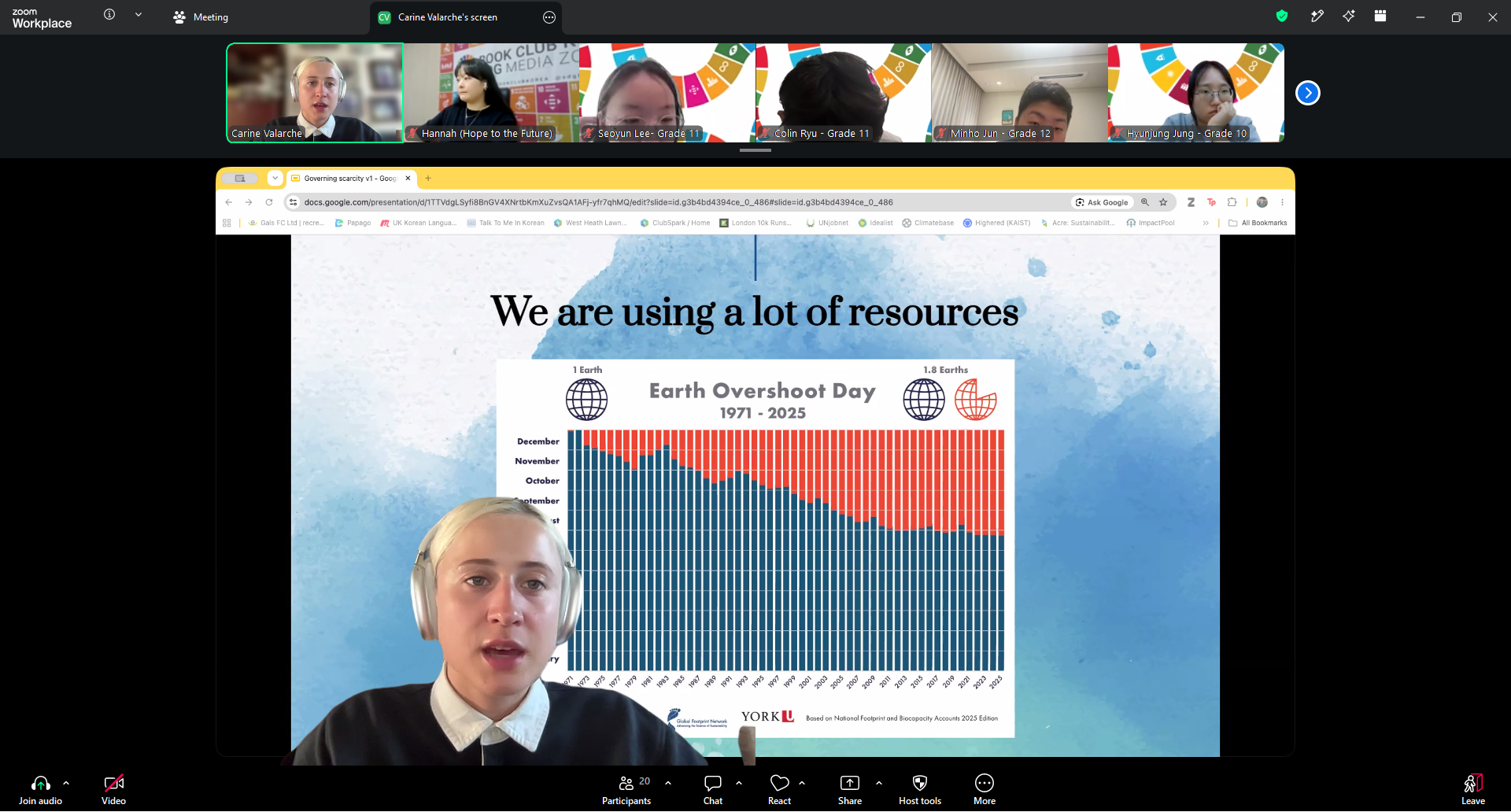
교육 셋째 날은 기후변화와 도시, 국제개발협력, 자원 희소성 등 서로 긴밀하게 연결된 글로벌 현안을 다각도로 탐구하는 시간이었습니다. 학생들은 글로벌 과제에 대응하기 위해서는 국제적인 정책과 재정적 지원뿐만 아니라 지역의 특성을 반영한 실행 방안, 다양한 이해관계자 간의 협력, 공정하고 책임 있는 의사결정이 함께 이루어져야 한다는 점을 배웠습니다.
강연과 토론에 열정적으로 참여해 준 학생 여러분과 귀중한 전문 지식과 통찰을 나누어 주신 모든 연사분께 깊이 감사드립니다.The third day provided students with an opportunity to examine a range of closely interconnected global issues, including climate change, cities, international development cooperation, and resource scarcity. Students learned that responding effectively to global challenges requires not only international policies and financial support, but also locally tailored action, cooperation among diverse stakeholders, and equitable and responsible decision-making.
We extend our sincere appreciation to all participating students for their enthusiastic engagement in the lectures and discussions, and to each of our distinguished speakers for sharing their valuable expertise and insights.


 글수
글수 


