
희망기구소식
희망기구소식
미래희망기구의 소식 입니다.
제26기 UN 전문가 교육 둘째 날에는 글로벌 의제가 형성되는 과정과 세계시민의식의 의미, 지속가능발전을 뒷받침하는 사회·경제적 협력 구조를 다각도로 살펴보았습니다. 학생들은 국제사회가 공동의 목표를 설정하고 이를 실현해 나가는 과정을 이해하며, 지속가능한 미래를 위해 청소년이 실천할 수 있는 역할을 고민했습니다.
The second day of the program explored the processes through which global agendas are shaped, the meaning of global citizenship, and the socio-economic structures that support sustainable development. Students examined how the international community establishes and advances shared goals while considering practical ways in which young people can contribute to a more sustainable future.
1. 함께 살아가는 세상의 지속가능한 발전을 위한 청년 세대의 역할 | The Role of Youth and Global Citizenship in Building a Sustainable Future
연사: 오준 이사장 (세이브더칠드런, 전 유엔 대사)
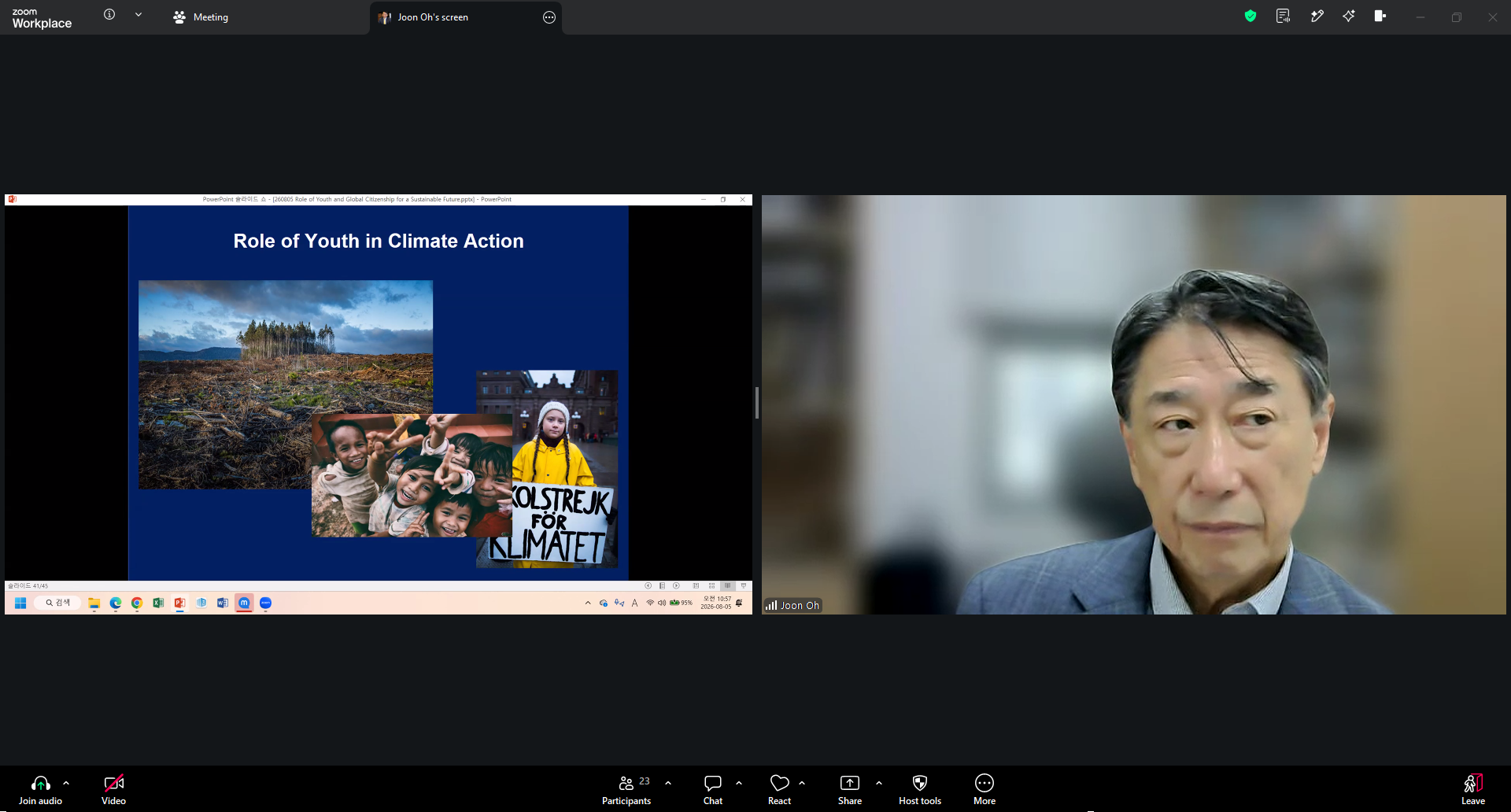
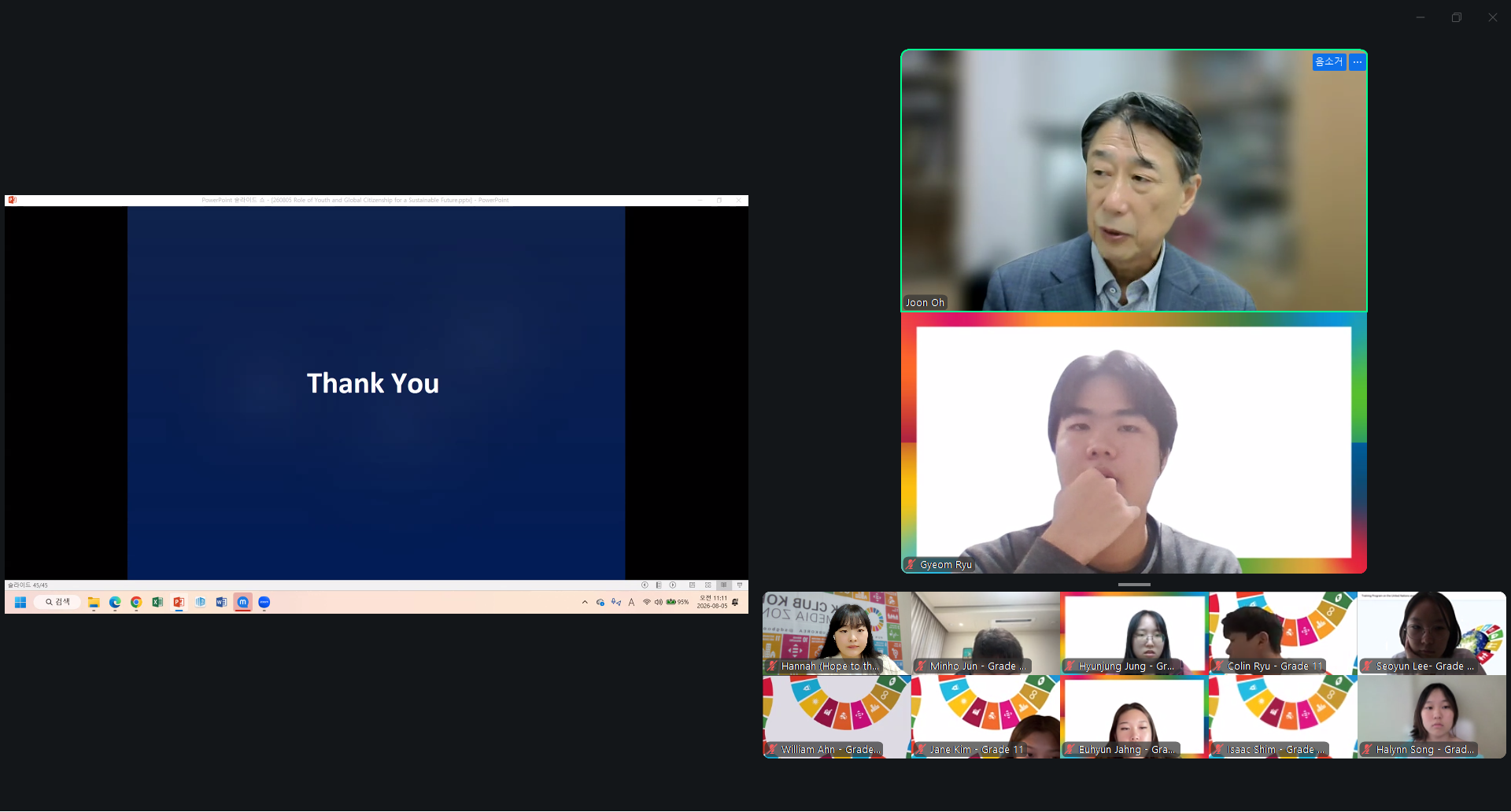
오준 대사님은 지속가능한 미래를 만들어 가는 청년 세대의 역할과 세계시민의식을 주제로 둘째 날의 첫 강연을 시작해 주셨습니다. 풍부한 국제무대 경험을 바탕으로, 빠르게 변화하는 세계를 살아갈 청소년들이 자신의 선택과 행동이 지역사회와 국제사회에 미치는 영향을 인식하는 것이 중요하다고 강조했습니다. 또한 서로 다른 문화와 관점을 열린 자세로 이해하고 존중하는 것이 더 나은 미래를 만들어 가는 의미 있는 첫걸음임을 전했습니다.
학생들은 세계시민이란 단순히 국제사회에 관심을 갖는 사람을 넘어, 세계가 서로 연결되어 있음을 이해하고 공동의 문제를 해결하기 위해 책임 있게 행동하는 사람이라는 점을 생각해 볼 수 있었습니다.
Ambassador Oh Joon opened the second day with a session on the role of youth and global citizenship in building a sustainable future. Drawing on his extensive experience in international affairs, he emphasized the importance of young people recognizing how their choices and actions can affect both their local communities and the wider international community. He also highlighted that approaching different cultures and perspectives with openness and respect is a meaningful first step toward creating a better future.
02. 국제무역, 금융과 개발 | International Trade, Finance and Development
연사: 김건휘 교수 (가톨릭대학교 국제학부)
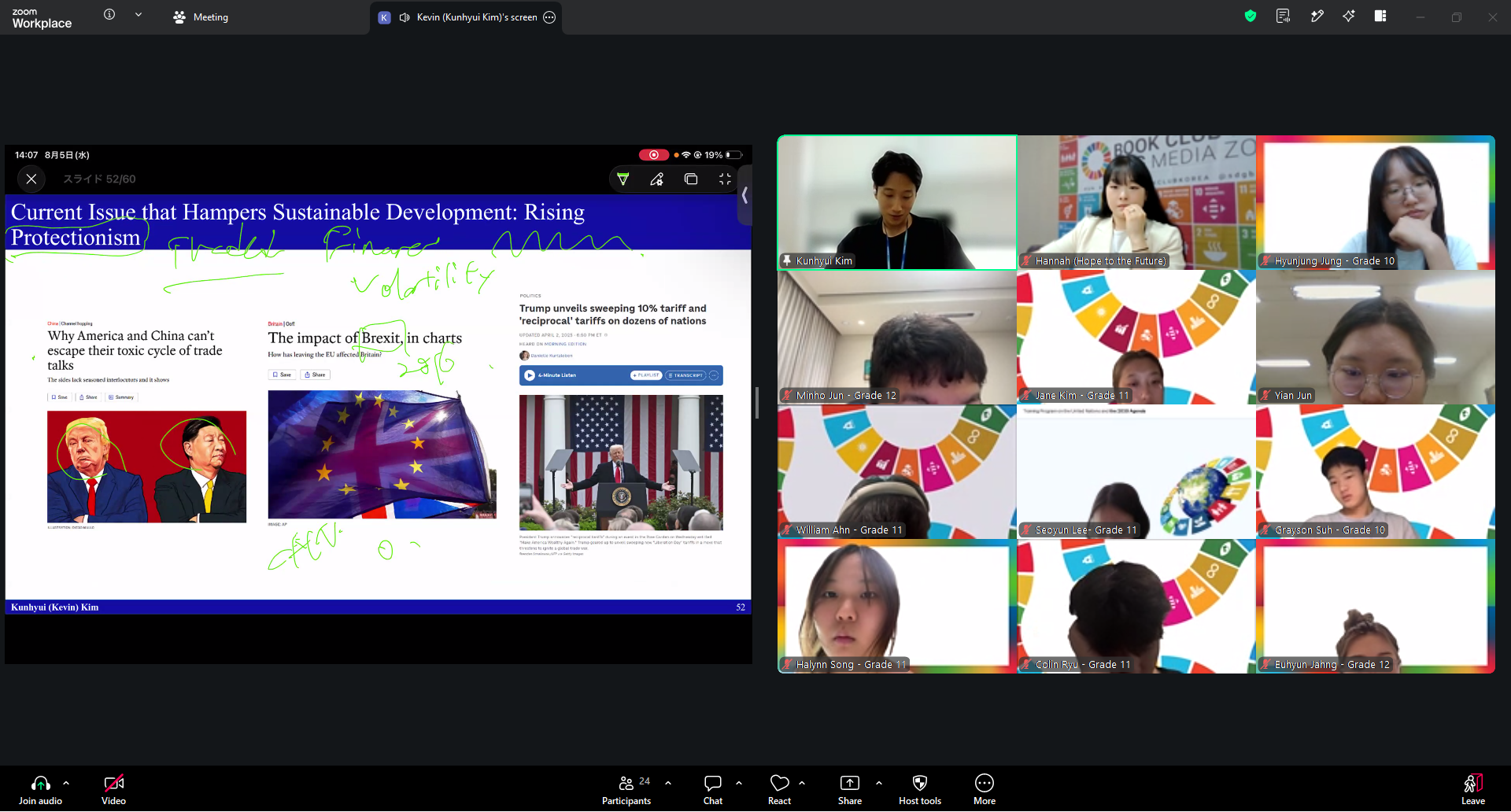
김건휘 교수님은 국제무역과 금융이 지속가능발전에 미치는 영향을 중심으로 SDG 1 ‘빈곤퇴치’와 SDG 9 ‘산업, 혁신과 사회기반시설’을 설명해 주셨습니다. 다양한 사례를 통해 경제성장과 산업 발전이 일자리 창출과 빈곤 감소, 삶의 질 향상에 어떠한 영향을 미치는지 살펴보았습니다. 이와 함께 경제적 성과가 사회 전체의 지속가능한 발전으로 이어지기 위해서는 포용적인 제도와 국제협력, 장기적인 관점의 정책이 뒷받침되어야 한다는 점을 생각해 보았습니다.
Dr. Kunhyui Kim examined the impact of international trade and finance on sustainable development, with a particular focus on SDG 1, No Poverty, and SDG 9, Industry, Innovation and Infrastructure. Through a range of examples, students explored how economic growth and industrial development can contribute to job creation, poverty reduction, and improvements in quality of life. They also considered the importance of inclusive institutions, international cooperation, and long-term policy approaches in ensuring that economic progress contributes to sustainable development across society.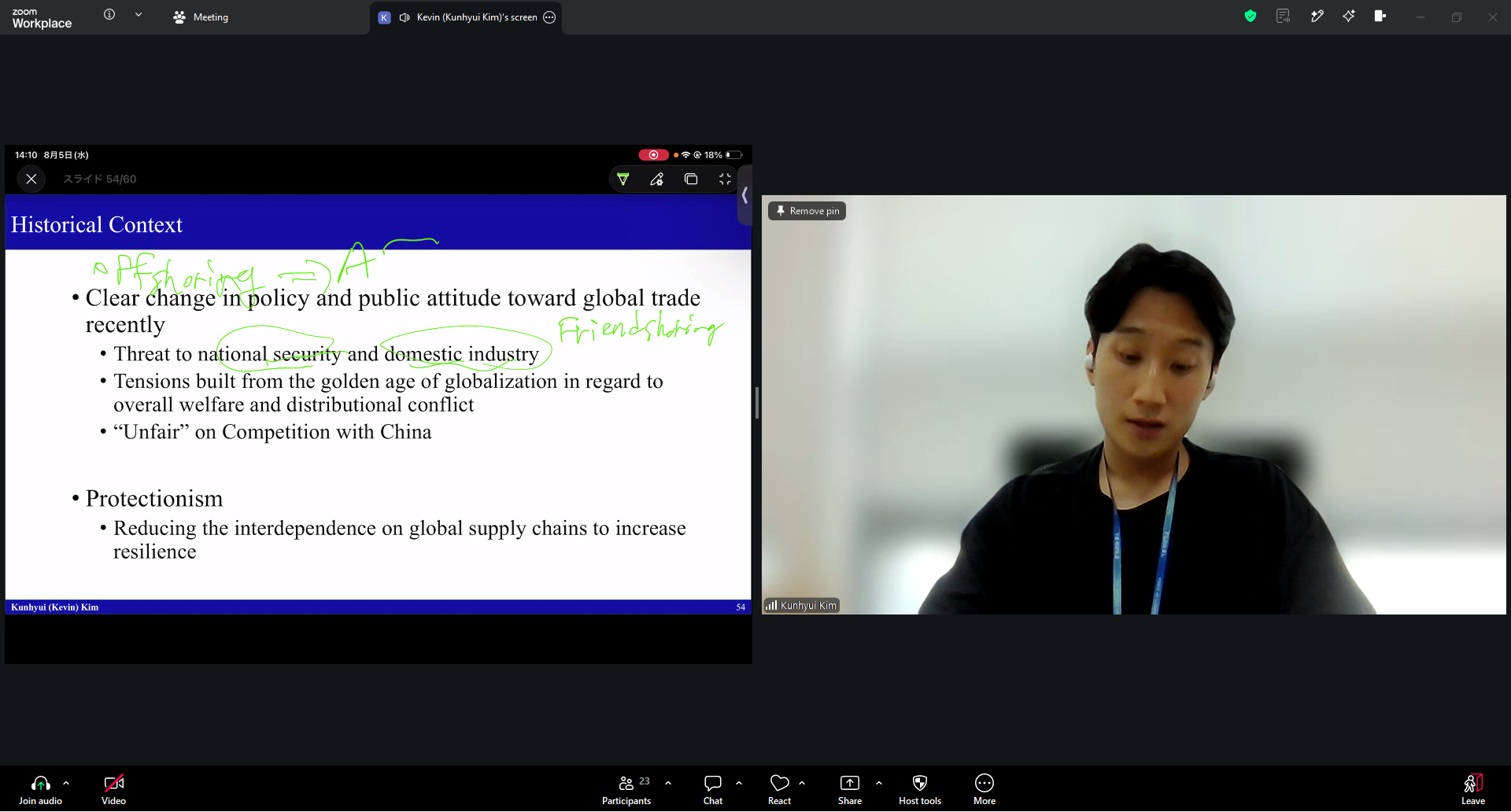
03. 세계시민교육: 글로벌 의제 설정 | Global Citizenship Education: The Politics of Global Agenda-Setting
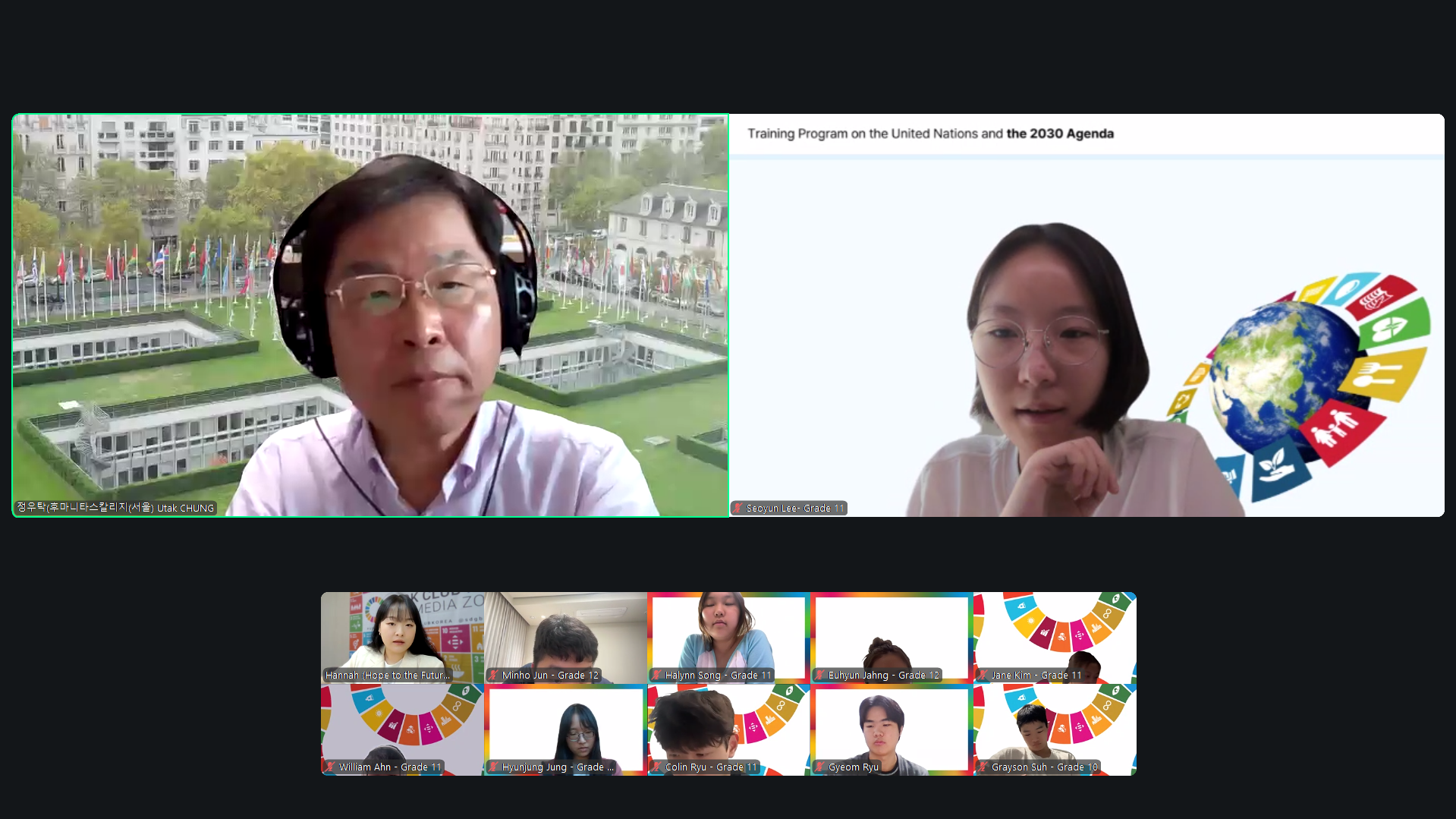
연사: 정우탁 교수 (경희대학교, 전 유네스코 아태국제이해교육원장)이어진 강연에서는 정우탁 교수님과 함께 세계시민교육과 글로벌 의제 설정의 의미를 살펴보았습니다. 학생들은 유엔을 비롯한 국제사회가 교육을 지속가능발전의 핵심 요소로 강조해 온 배경을 알아보고, 어떠한 문제가 국제사회의 주요 의제로 채택되는지, 그 과정에서 다양한 국가와 기관, 이해관계자의 관점이 어떻게 반영되는지 생각해 보았습니다. 또한 글로벌 이슈를 주어진 정보 그대로 받아들이기보다, 의제가 형성된 배경과 서로 다른 이해관계를 비판적으로 분석하는 자세가 중요하다는 점을 배웠습니다. 정우탁 교수님은 미래 세대가 책임 있는 세계시민으로 성장하여 더 나은 사회를 만들어 갈 수 있도록 진심 어린 조언과 비전을 전했습니다.
The following session explored Global Citizenship Education and the politics of global agenda-setting with Dr. Utak Chung. Students examined why the United Nations and the broader international community have emphasized education as a central component of sustainable development. They also considered how certain issues become global priorities and how the perspectives of different countries, institutions, and stakeholders are reflected in the agenda-setting process. The session highlighted the importance of moving beyond the passive acceptance of information and critically examining the context in which global agendas are formed, as well as the different interests involved. Dr. Chung also shared thoughtful advice and a vision for the future, encouraging students to grow into responsible global citizens and contribute to building a better society.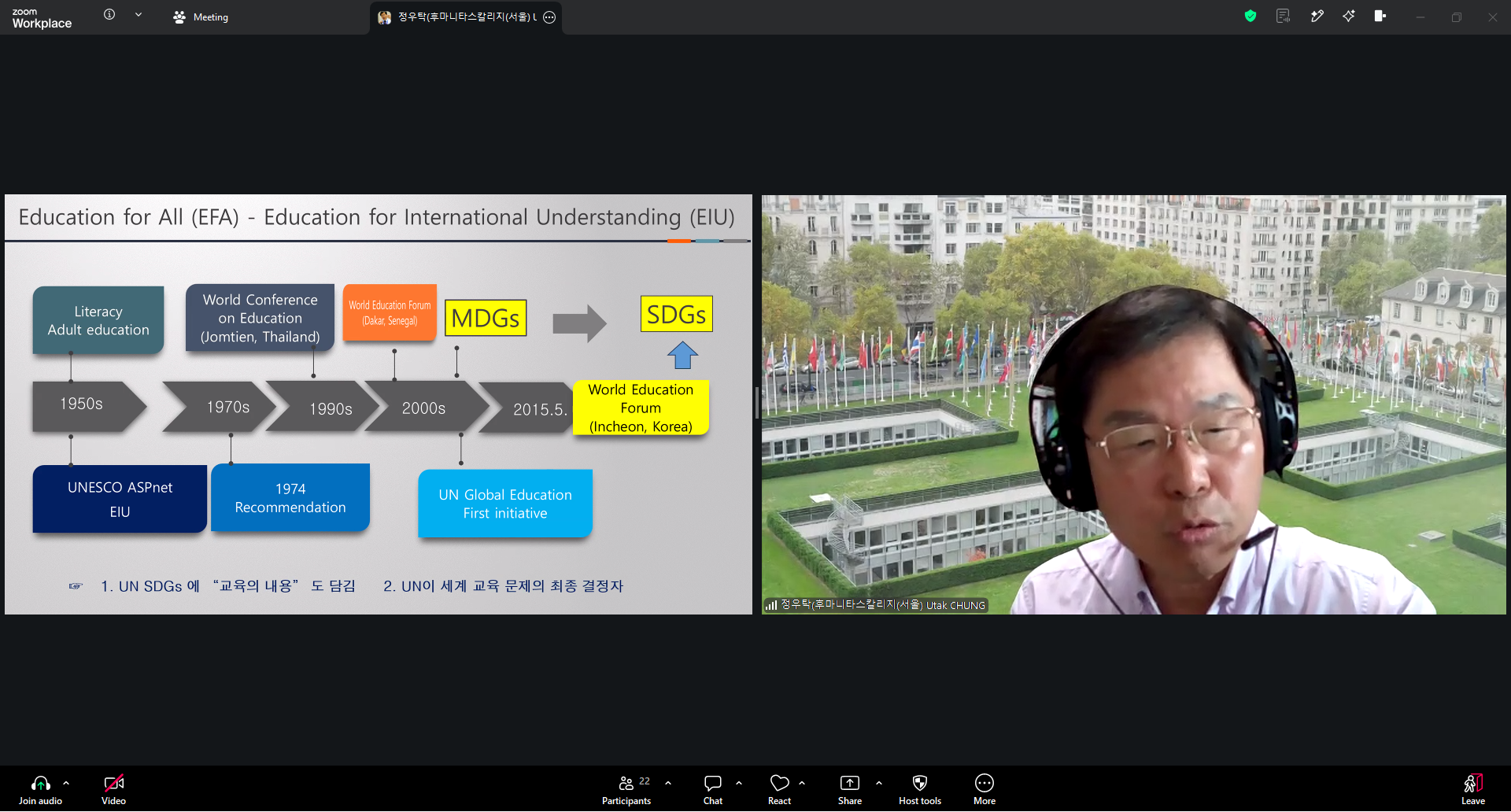
04. 지속가능발전 달성을 위한 다중이해관계자 접근과 공공외교의 역할 | The Role of Multi-Stakeholder Engagement and Public Diplomacy in Achieving Sustainable Development
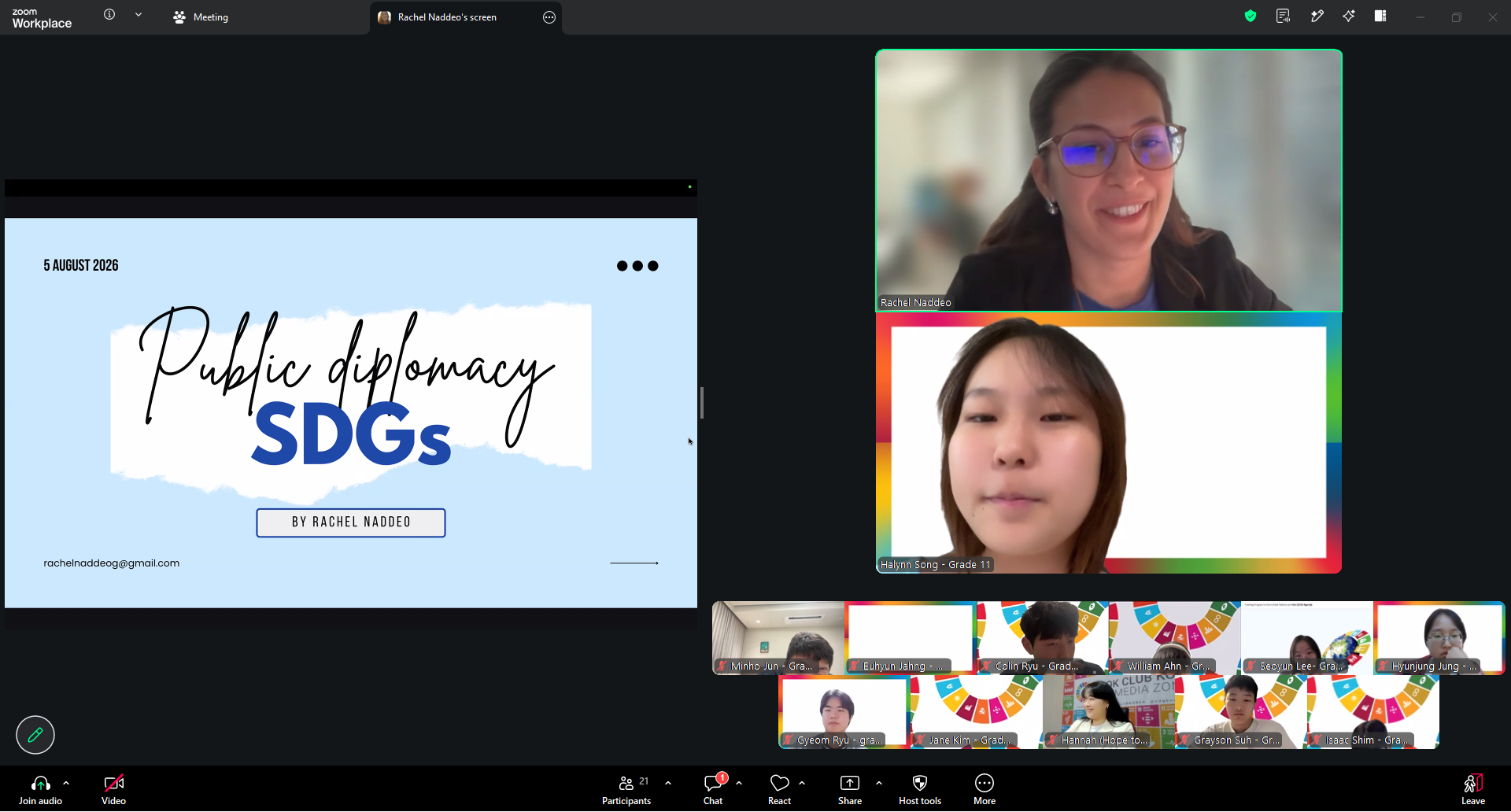
연사: Ms. Rachel Naddeo (Rothschild & Co, Tohoku University)Rachel Naddeo 연사님은 지속가능발전목표와 공공외교의 개념을 소개하고, 지속가능발전의 달성을 위해 다중이해관계자 간 협력이 필요한 이유를 설명해 주셨습니다. 정부와 국제기구뿐만 아니라 기업, 시민사회, 학계, 지역사회와 시민 등 다양한 주체가 각자의 전문성과 자원을 바탕으로 협력해야 복합적인 글로벌 과제에 효과적으로 대응할 수 있음을 강조했습니다. 또한 공공외교를 통해 국가와 사회 간 상호 이해와 신뢰, 협력을 형성한 여러 사례를 소개해 주시며, 글로벌 과제를 경쟁이 아닌 협력의 관점에서 바라보아야 한다고 설명하셨습니다.
Ms. Rachel Naddeo introduced the Sustainable Development Goals and the concept of public diplomacy, explaining why cooperation among multiple stakeholders is essential to achieving sustainable development. She emphasized that complex global challenges require collaboration not only among governments and international organizations, but also among businesses, civil society, academia, local communities, and individual citizens, each contributing their respective expertise and resources. She also presented examples illustrating how public diplomacy can foster mutual understanding, trust, and cooperation across countries and societies. The session encouraged students to approach international issues through the lens of cooperation and to consider how communication can connect diverse stakeholders.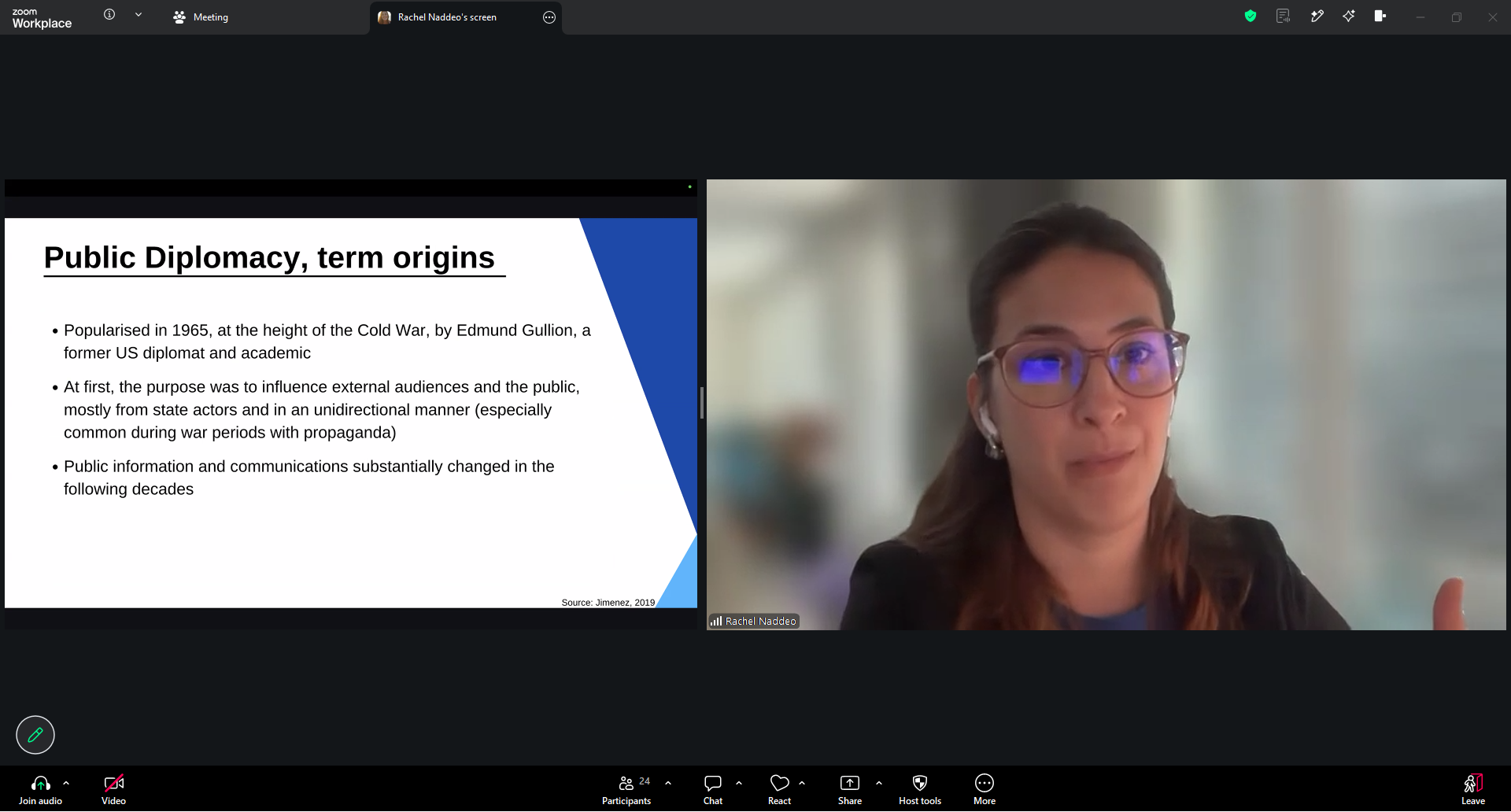
둘째 날 일정도 각 분야 전문가들의 깊이 있는 강연과 학생들의 적극적인 질의응답 속에 의미 있게 마무리되었습니다.
학생들은 세계시민으로서 청소년이 수행할 수 있는 역할을 시작으로 국제무역과 금융, 글로벌 의제 설정, 다중이해관계자 협력과 공공외교를 차례로 살펴보았습니다. 이를 통해 지속가능발전은 어느 한 국가나 기관만의 노력으로 달성할 수 없으며, 다양한 주체의 책임 있는 참여와 긴밀한 협력이 필요하다는 점을 이해했습니다.열정적으로 참여해 준 학생 여러분과 풍부한 경험과 통찰을 나누어 주신 모든 연사분께 진심으로 감사드립니다.
Throughout the day, participants explored the role of youth as global citizens, international trade and finance, global agenda-setting, multi-stakeholder cooperation, and public diplomacy. These sessions helped them understand that sustainable development cannot be achieved by any single country or institution; it requires responsible participation and close collaboration among diverse actors.
We extend our sincere gratitude to all participating students for their enthusiasm and thoughtful engagement, and to each of our distinguished speakers for sharing their valuable experience and insights.


 글수
글수 


