
희망기구소식
희망기구소식
미래희망기구의 소식 입니다.
교육 4일 차에는 ‘단 한 사람도 소외되지 않는(Leaving No One Behind)’ 포용적 발전이라는 유엔의 핵심 원칙을 중심으로 지금까지 논의한 의제들을 바탕으로 미래를 향한 새로운 시각을 확장하는 데 집중했습니다. 학생들은 빈곤, 데이터, 인간개발, 기후 협상, 공공외교에 이르기까지 다양한 주제를 통해 지속가능한 발전의 방향을 종합적으로 고민해보는 시간을 가졌습니다.
Day 4 | January 10
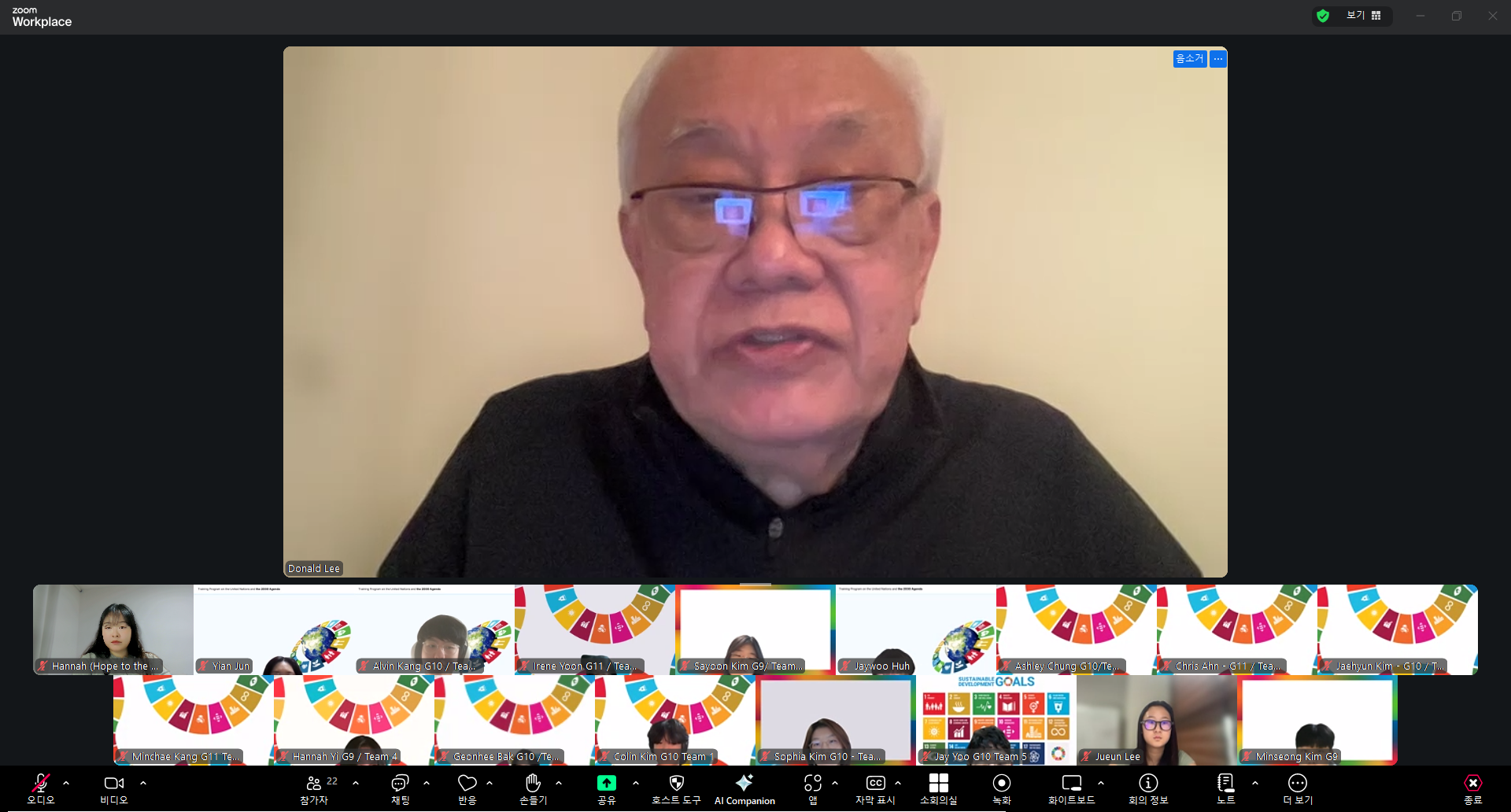
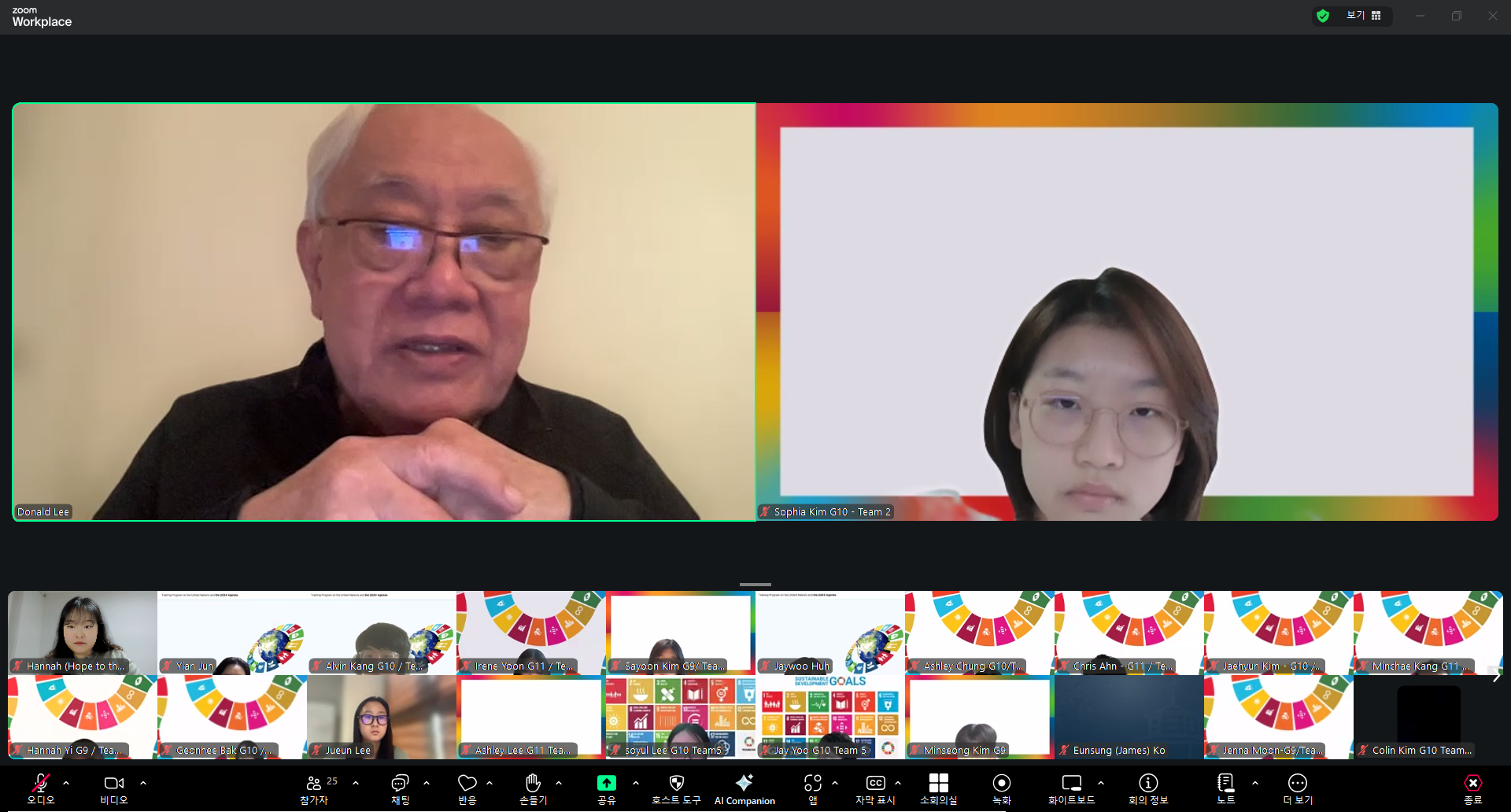
Dr. Donald Lee shared the international community’s perspectives and approaches to poverty, focusing on SDG 1 (No Poverty) and the Leave No One Behind (LNOB) principle. His passionate and thoughtful insights as an economist drew strong engagement from the students, as he emphasized why it is essential to listen to the voices of the most vulnerable in the process of formulating development policies, and how this approach is closely linked to human rights. The session encouraged students to reflect on the fundamental values of inclusive development.
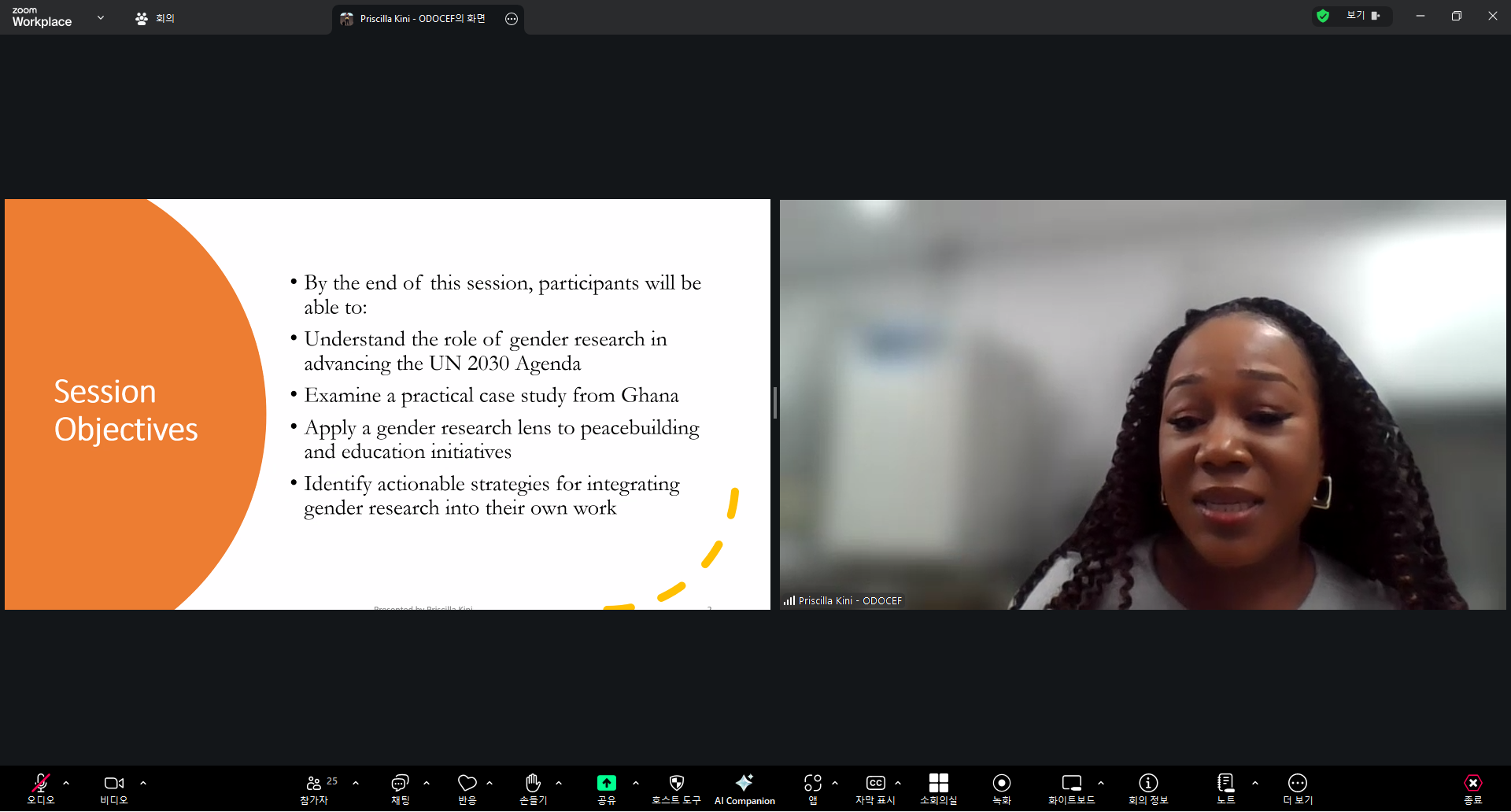
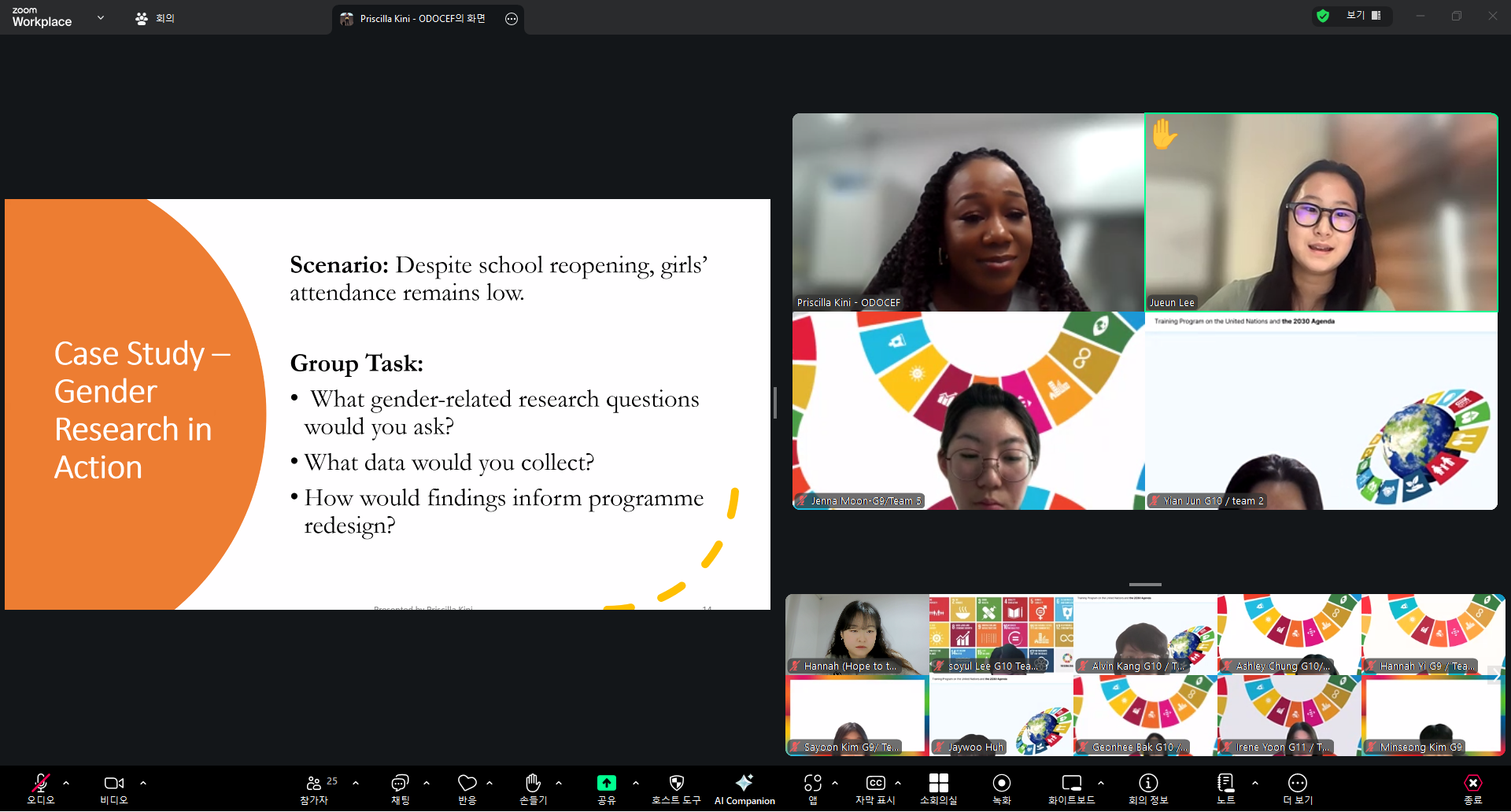
Priscilla Kini 연사님은 젠더 연구와 지속가능발전목표(SDGs)의 연계를 중심으로, 젠더 관점의 데이터와 학술 연구가 어떻게 국제 정책으로 반영되고, 현장의 행동과 변화로 이어지는지를 설명해 주셨습니다. 특히, 가나의 어린이 재단에서 일했던 경험을 바탕으로 성평등 교육이 어떻게 현장에서 이루어지고 있는지를 생생하게 소개하시며, 이것이 사회 구조를 변화시키고 실질적인 임팩트를 만들어내는 중요한 출발점이 될 수 있음을 강조해 주셨습니다.
Ms. Priscilla Kini focused on the link between gender research and the Sustainable Development Goals (SDGs), explaining how gender-informed data and academic research are translated into international policy frameworks and concrete actions on the ground. Drawing on her experience working with a children’s foundation in Ghana, she illustrated how gender equality education is implemented in practice, emphasizing that such efforts can serve as a critical starting point for transforming social structures and creating meaningful impact.
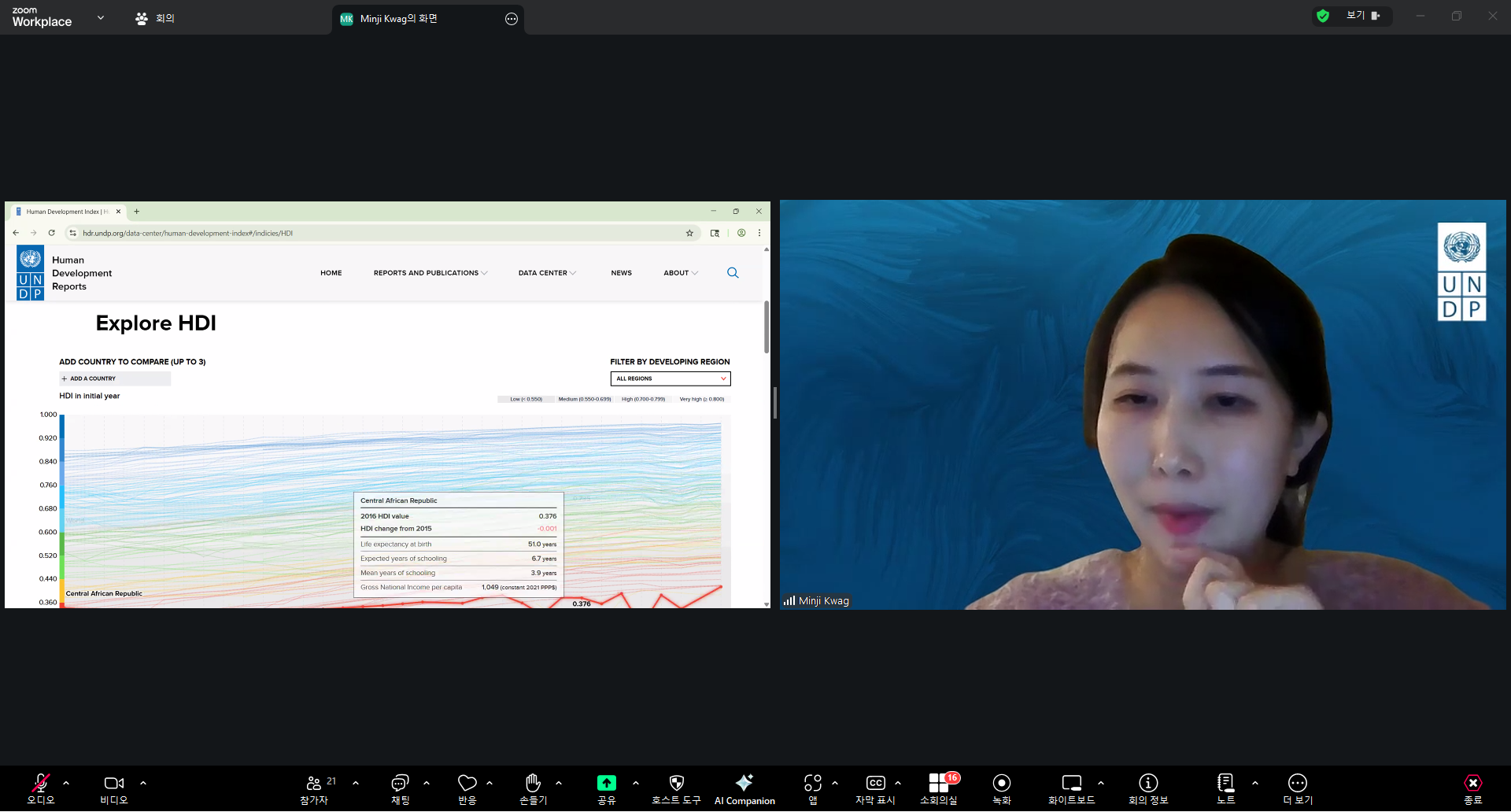
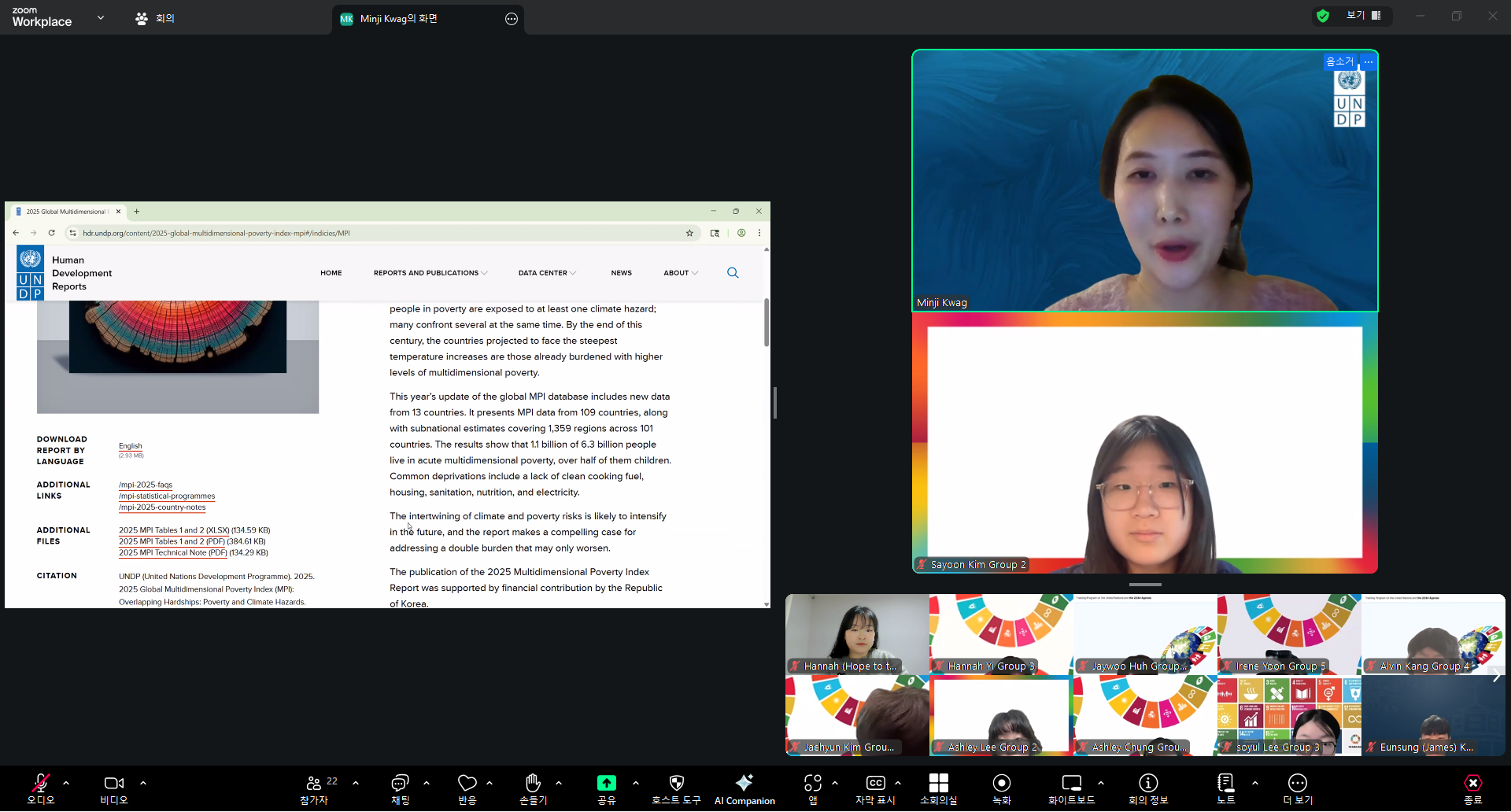
곽민지 공보관님은 인간개발보고서(Human Development Report)를 중심으로 우리가 흔히 말하는 ‘발전’을 어떻게 정의하고 측정하는지를 설명해 주셨습니다. GDP와 같은 경제 지표를 넘어, 인간의 삶의 질과 선택의 확장을 중시하는 인간개발의 개념과 지속가능발전목표(SDGs) 3, 4, 8 등을 연관지으며 학생들에게 세상을 바라보는 새로운 관점을 제시해주셨습니다.
*인간개발보고서 보러가기 click
Ms. Kwag introduced the Human Development Report (HDR), explaining how the concept of “development” has traditionally been defined and measured. Moving beyond economic indicators such as GDP, she highlighted the idea of human development, which emphasizes quality of life and the expansion of people’s choices. By linking this framework to SDGs 3, 4, and 8, she offered students a new lens through which to understand global development and progress.
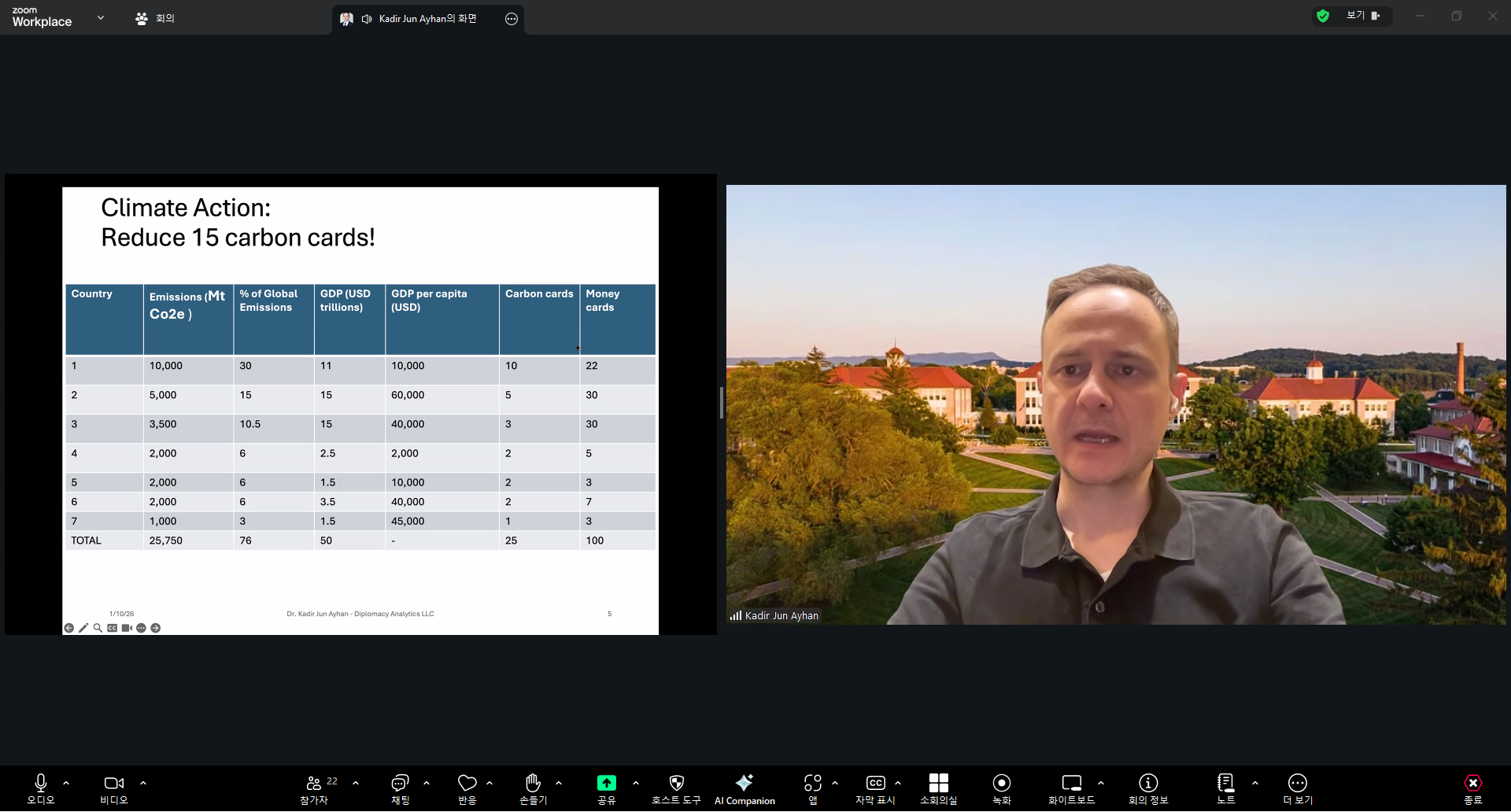
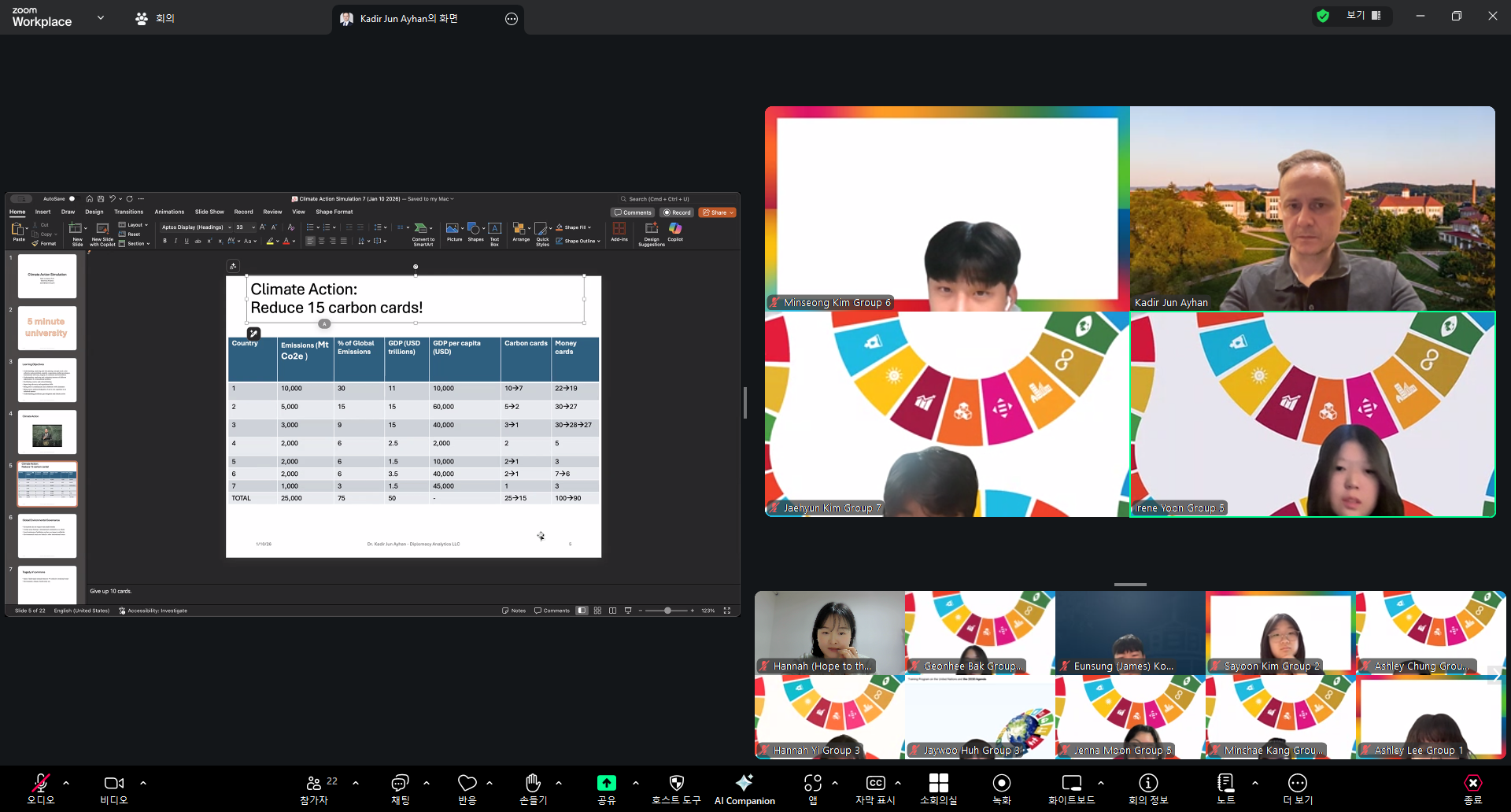
Dr. Kadir Jun Ayhan께서는 기후변화 협상 시뮬레이션을 통해 학생들은 각국의 입장이 되어 협상 과정과 이해관계 조정의 복잡성을 직접 체험할 수 있도는 세션을 구성해 주셨습니다. 대표단 학생들은 경제 발전 수준과 탄소 배출량이 서로 다른 국가를 대표하여 협상에 참여했으며, 이론으로만 접하던 국제 협상의 현실과 외교적 딜레마를 몸소 느끼며, 다자 외교의 어려움과 중요성을 깊이 이해하는 특별한 시간이었습니다.
Dr. Kadir Jun Ayhan designed a climate change negotiation simulation that allowed students to step into the roles of different countries and experience firsthand the complexities of negotiation and interest coordination. Student delegates represented countries with varying levels of economic development and carbon emissions, enabling them to engage directly with the realities of international negotiations and diplomatic dilemmas that are often encountered only in theory. Through this immersive experience, students gained a deeper understanding of both the challenges and the significance of multilateral diplomacy.
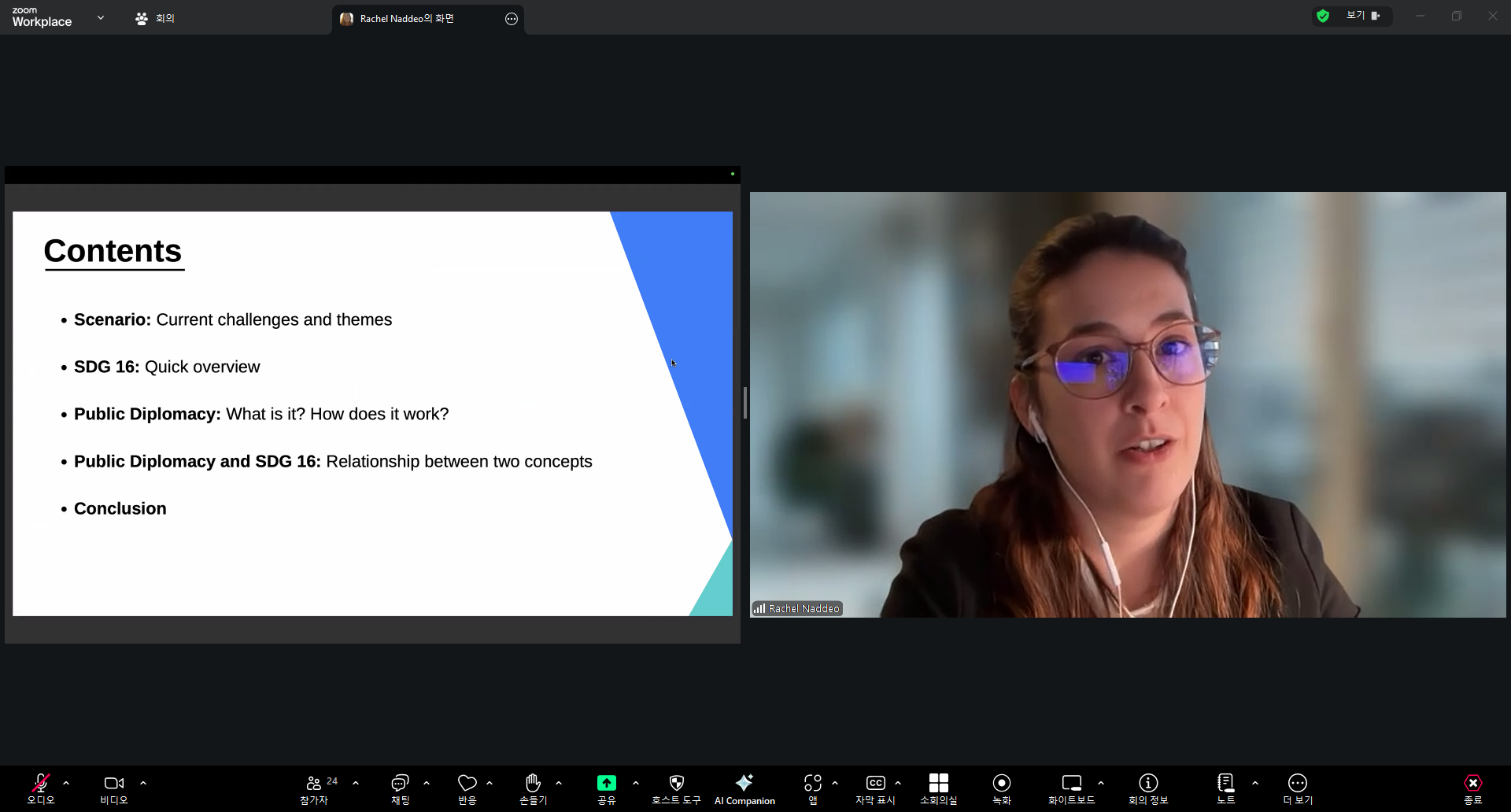
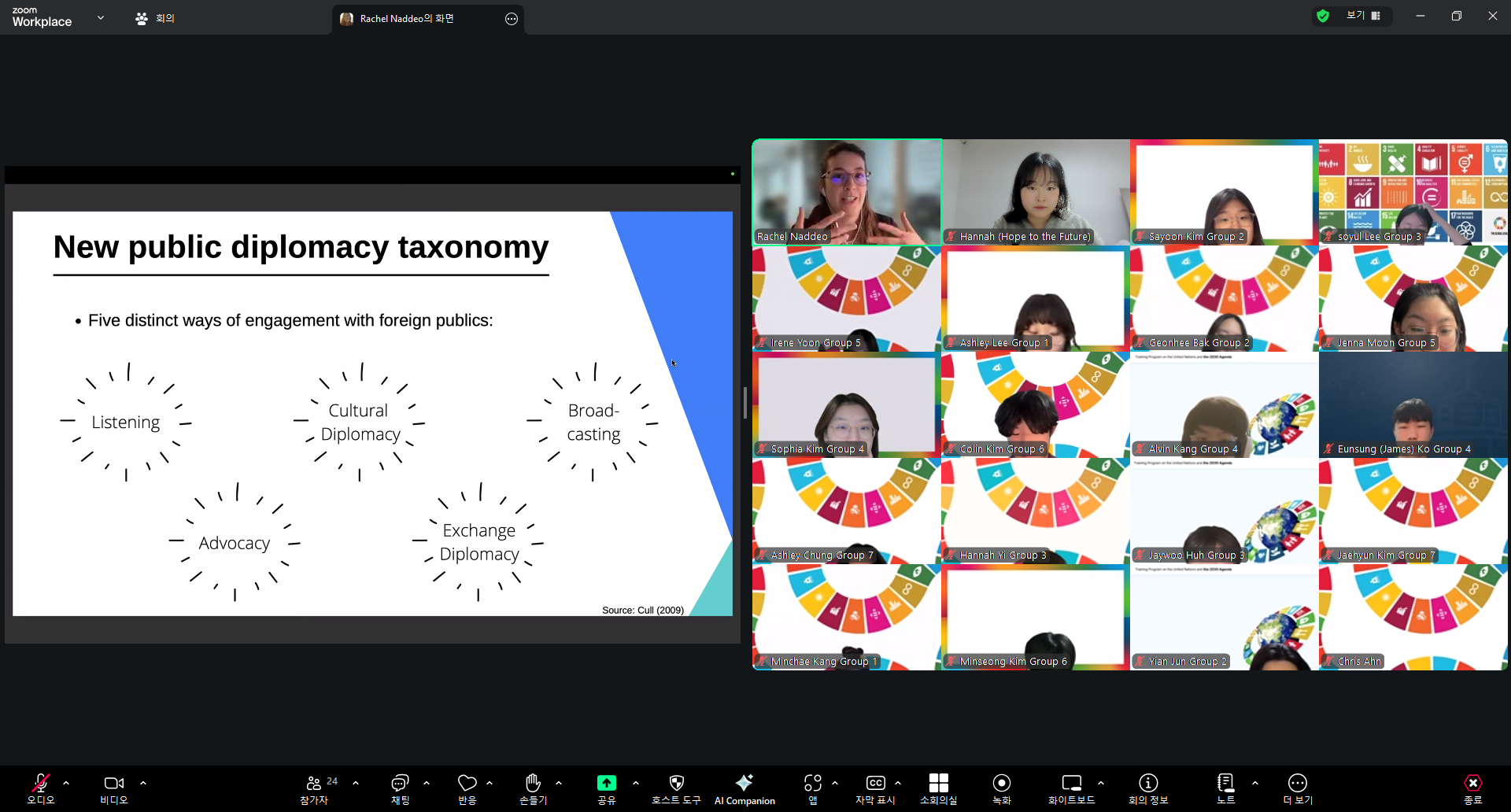
Rachel Naddeo 연사님은 공공외교와 SDG 16을 연결 지으며, 외교가 더 이상 정부만의 영역이 아니라 기업, 미디어, 시민, 개인 등 다양한 주체가 참여하는 영역임을 보여주었습니다. 학생들은 외교의 개념을 보다 넓게 확장하며, 미래에 자신들이 수행할 수 있는 역할을 구체적으로 그려보는 계기를 가졌습니다.
Connecting public diplomacy with SDG 16, Ms. Rachel Naddeo demonstrated that diplomacy is no longer the sole domain of governments. Corporations, media, civil society, and individuals can all act as diplomatic actors. This session encouraged students to broaden their understanding of diplomacy and envision their own potential roles in the future.


 글수
글수 


